
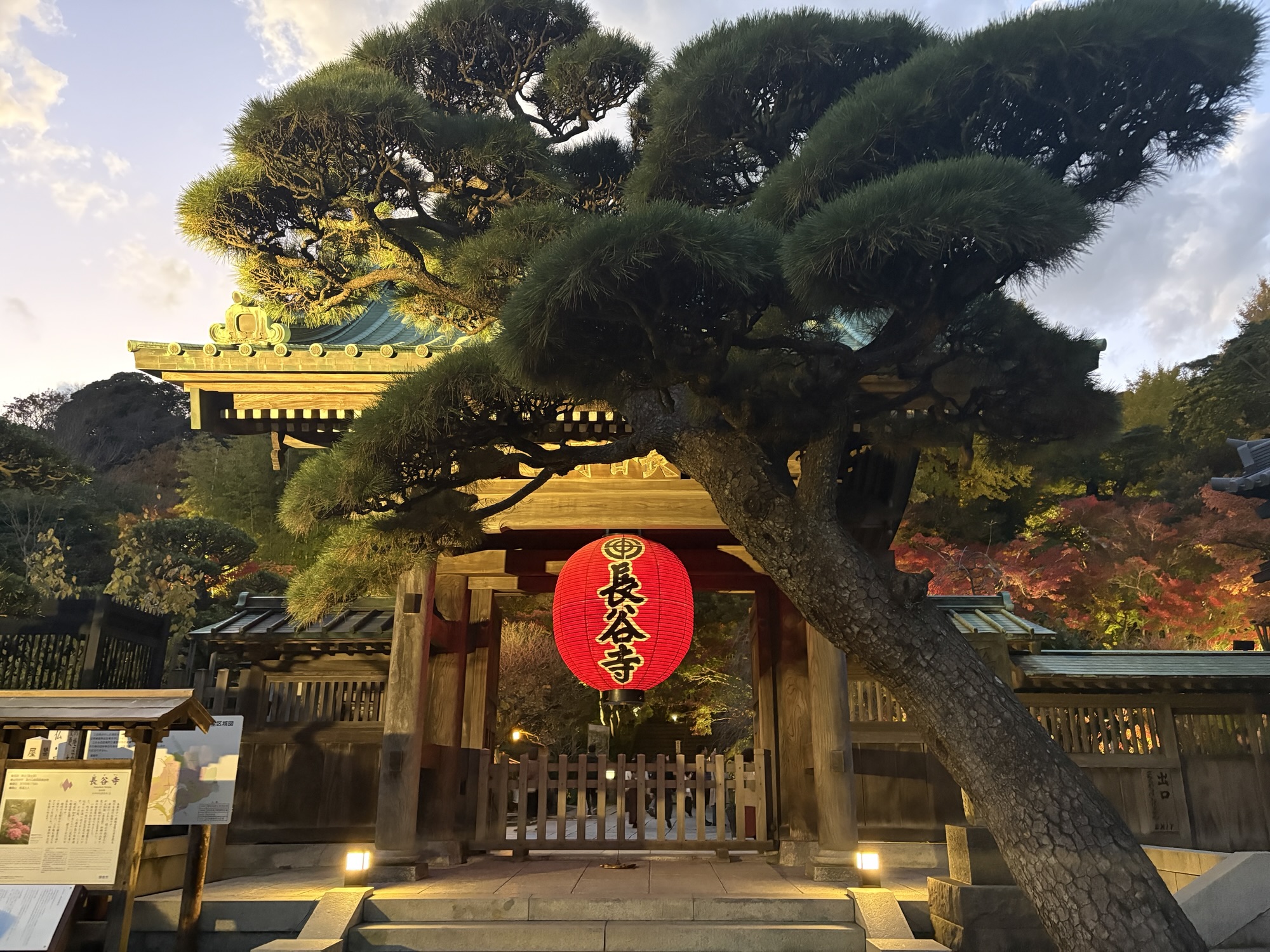

Have you ever been here, Hase Temple? Actually, here is my second most favorite temple in Kamakura. (My No.1 is Engakuji)
Last autumn, Hase Temple was held light up event at night. I’ve never been to the event so finally,I could visit here during the time. Hase Temple is known as a Japanese garden. Inside the garden, you’ll enjoy to see 4 seasons garden. Hopefully, the fallen leaves were started at the time, so I could see colorful view in the temple. Once you read my article, you’ll be able to understand why this temple is so beautiful!
***Are you looking for hotel in Kamakura? Agoda will help you!!!***

Contents
1. The Rich History of Hasedera

Nestled in the charming city of Kamakura, Hasedera stands as a symbol of spiritual harmony and artistic grandeur. This historic temple, part of the Jodo sect of Buddhism, was established in the 8th century. According to legend, the temple’s founding story is as captivating as its serene surroundings. It is said that a monk named Tokudo carved two statues of Kannon, the Goddess of Mercy, from a single camphor tree. One statue was enshrined at Hasedera in Nara, while the other was set adrift in the sea. Miraculously, it washed ashore in Kamakura, leading to the construction of this sacred site.
Hasedera is renowned for its towering statue of the Eleven-Headed Kannon, one of the largest wooden Buddhist statues in Japan, standing an impressive 9.18 meters tall. Visitors are awestruck by its intricate craftsmanship and the serene expression that embodies compassion. Beyond the statue, the temple houses a treasure trove of artifacts and scriptures that reflect the cultural and spiritual heritage of Japan. Over the centuries, Hasedera has been a place of solace and reflection, offering a profound connection to history for those who wander its grounds.

2. A Garden of Four Seasons

Hasedera is not just a temple; it’s a living canvas that transforms with the seasons. Its meticulously designed Japanese garden offers a symphony of colors and textures throughout the year. In spring, the temple bursts into life with vibrant cherry blossoms that frame the pagodas and pathways, creating a magical atmosphere. As summer approaches, lush hydrangeas bloom in abundance, drawing visitors to the temple’s famous Hydrangea Path, where shades of blue, purple, and pink blend harmoniously.
Autumn transforms Hasedera into a tapestry of fiery red and golden hues as the maple trees shed their leaves. This season is particularly enchanting during the evening light-ups, where the illuminated foliage creates a surreal ambiance. In winter, the temple’s quiet beauty is accentuated by camellias and the occasional dusting of snow, offering a tranquil retreat from the world.
Hasedera’s garden is a testament to the Japanese appreciation for nature’s fleeting beauty. Each visit reveals a different facet of its charm, making it a destination that resonates with the heart in every season. Whether you’re drawn to its history, art, or natural splendor, Hasedera promises an unforgettable experience.


3. Location and Access

Hasedera is conveniently located in Kamakura, just a 5-minute walk from Hase Station on the Enoden (Enoshima Electric Railway) line. The temple’s proximity to the station makes it easily accessible for visitors exploring the area. Additionally, Hasedera is near other popular landmarks such as the Great Buddha (Kotoku-in) and Kosokuji Temple, making it an excellent stop on a cultural tour of Kamakura. Its location amidst lush greenery and serene surroundings adds to the tranquil atmosphere, allowing visitors to immerse themselves fully in the beauty and history of this iconic temple.

4. Conclusion

Totally, Hasedera is must-visit place in Kamakuta to enjoy seeing colorful and seasonal Japanese garden. As I told you, here is close from Kamakura Buddha Statue. In my case, when I go to Hasedera, I always spend around 1hour and half to walk around. Maybe you’ll be addicted to see Japanese garden.


Leave a Reply