
Contents
Introduction – A Beautiful Tradition You Might See While Traveling in Japan
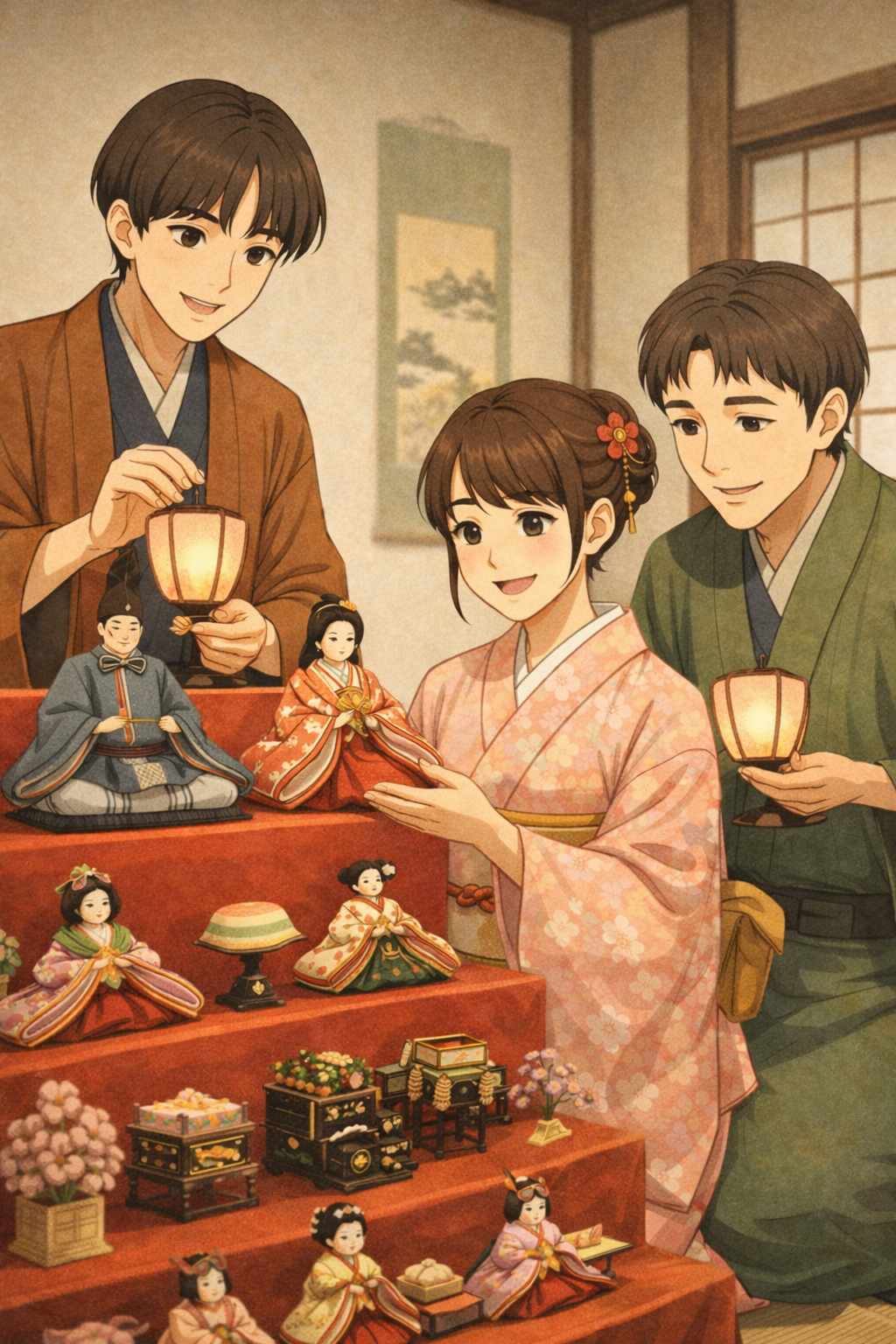
If you visit Japan in early March, you may notice something beautiful displayed in homes, hotels, department stores, or even traditional inns. Elegant dolls dressed in colorful kimono are carefully arranged on red platforms, creating a scene that feels almost like stepping back into Japan’s ancient history.
These dolls are part of Hinamatsuri, also known as Girls’ Day or the Japanese Doll Festival, a traditional celebration held every year on March 3rd.
For many travelers, this may be the first time seeing these dolls, and it can raise an interesting question: What exactly is this festival about?
Hinamatsuri is one of Japan’s seasonal traditions that celebrates the growth, happiness, and well-being of girls. Families with daughters display beautiful sets of dolls representing the imperial court of ancient Japan and pray for their children’s health and future.
But this tradition is not just about dolls. It is deeply connected to Japanese history, seasonal changes, and family culture.
Understanding Hinamatsuri gives travelers a unique glimpse into how Japanese people celebrate spring, family, and centuries-old traditions that continue to live on today.
March 3rd – What Is Hinamatsuri?

Hinamatsuri takes place every year on March 3rd, marking one of Japan’s beloved seasonal celebrations.
The word hina refers to the dolls used in the festival, while matsuri means festival. Together, the name literally translates to “Doll Festival.”
During this time, families with daughters display hina dolls inside their homes. The dolls are usually arranged on a tiered platform covered with red cloth, known as hinadan. The full display can include several levels, each representing members of the imperial court.
At the very top of the display sit the Emperor and Empress dolls, dressed in elegant clothing inspired by Japan’s ancient court culture. Below them, you may find court ladies, musicians, guards, and miniature furniture that recreate scenes from palace life over a thousand years ago.
These dolls are not simply decorative objects. They carry a symbolic meaning.
By displaying hina dolls, families express their wish for their daughters to grow up healthy, happy, and safe.
For travelers visiting Japan during this season, it’s not uncommon to see these displays in public spaces such as hotels, shopping malls, museums, or even train stations. In some regions, entire communities create large hina doll exhibitions that attract visitors from across the country.
Seeing these beautiful dolls is often one of the subtle signs that spring is quietly arriving in Japan.
Why Is Hinamatsuri a Celebration for Girls?

Hinamatsuri is widely known as Girls’ Day, a celebration dedicated to the well-being and happiness of young girls.
Historically, Japanese families would pray for their daughters to grow up healthy, avoid illness, and live a prosperous life. The hina dolls symbolize protection and are believed to act as guardians that absorb bad luck or misfortune that might otherwise fall upon the child.
This idea comes from an ancient belief that objects, including dolls, could carry away impurities or bad fortune.
In earlier times, people practiced rituals where dolls were used as substitutes for the human body. The idea was simple but meaningful: negative energy or misfortune could be transferred into the doll instead of affecting the person.
While modern celebrations are mostly symbolic and joyful, this protective meaning still remains at the heart of the festival.
Hinamatsuri is also a moment when families gather together. Parents and grandparents often help set up the dolls with their children, sharing stories about the tradition and its history.
In this way, Hinamatsuri becomes more than just a festival. It is also a moment where family, tradition, and love come together.
The Origin – The Heian Period and “Hina Play”

The origins of Hinamatsuri date back more than one thousand years to the Heian period (794–1185), a time when Japan’s imperial court flourished with art, literature, and elegant cultural traditions.
During this period, aristocratic children enjoyed a game called “Hiina-asobi.”
Hiina-asobi was a form of doll play where children used small dolls to recreate scenes from everyday life. Much like modern dollhouses, these miniature worlds allowed children to imagine stories and imitate the lifestyles of nobles and court members.
Over time, this playful activity gradually merged with another cultural practice: ritual purification.
One such ritual was called Nagashi-bina, where people placed small dolls into rivers and allowed them to float away. These dolls symbolically carried away bad luck, illness, and misfortune.
Eventually, these two traditions — doll play and purification rituals — blended together.
Instead of floating dolls down rivers, families began displaying them inside their homes as protective symbols. The dolls evolved into the beautifully crafted hina dolls we see today.
By the Edo period (1603–1868), Hinamatsuri had become a widely celebrated event across Japan, and elaborate doll displays became a symbol of family pride and cultural heritage.
Even today, the dolls often reflect the refined fashion and lifestyle of the Heian court, preserving a visual connection to Japan’s distant past.
Hinamatsuri Foods – Special Dishes for the Celebration

Like many Japanese festivals, Hinamatsuri is also associated with special seasonal foods.
Families often prepare colorful and festive dishes that represent happiness, prosperity, and the arrival of spring.
One of the most common dishes is chirashi sushi.
Chirashi sushi is a bowl or plate of sushi rice topped with a variety of ingredients such as raw fish, shrimp, egg, vegetables, and pickled toppings. Its bright colors and beautiful presentation make it perfect for celebrations.
Another popular treat is hina arare, small colorful rice crackers that are often pink, white, green, and yellow. These colors are sometimes said to represent the changing seasons or the energy of spring.
For drinks, many people enjoy amazake, a traditional sweet rice beverage. Amazake has a mild sweetness and is often served warm, making it comforting during the still-cool days of early spring.
Travelers may find these foods in supermarkets, traditional sweets shops, or at seasonal festival events around early March.
Trying these dishes can be a wonderful way to experience the cultural flavor of Hinamatsuri while visiting Japan.
Final Thoughts – A Festival That Welcomes Spring
Hinamatsuri is more than just a display of beautiful dolls.
It is a tradition that carries over a thousand years of Japanese history, connecting modern families with ancient cultural beliefs and seasonal celebrations.
For Japanese families, the festival is a time to celebrate daughters, express love for family members, and welcome the gentle arrival of spring.
For travelers, Hinamatsuri offers a glimpse into Japan’s rich cultural heritage — one that quietly appears in homes, shops, and public spaces each March.
If you are visiting Japan around early March, take a moment to look for hina doll displays.
You may discover one of Japan’s most elegant seasonal traditions, where history, family, and the spirit of spring come together in a uniquely beautiful way.
Leave a Reply