
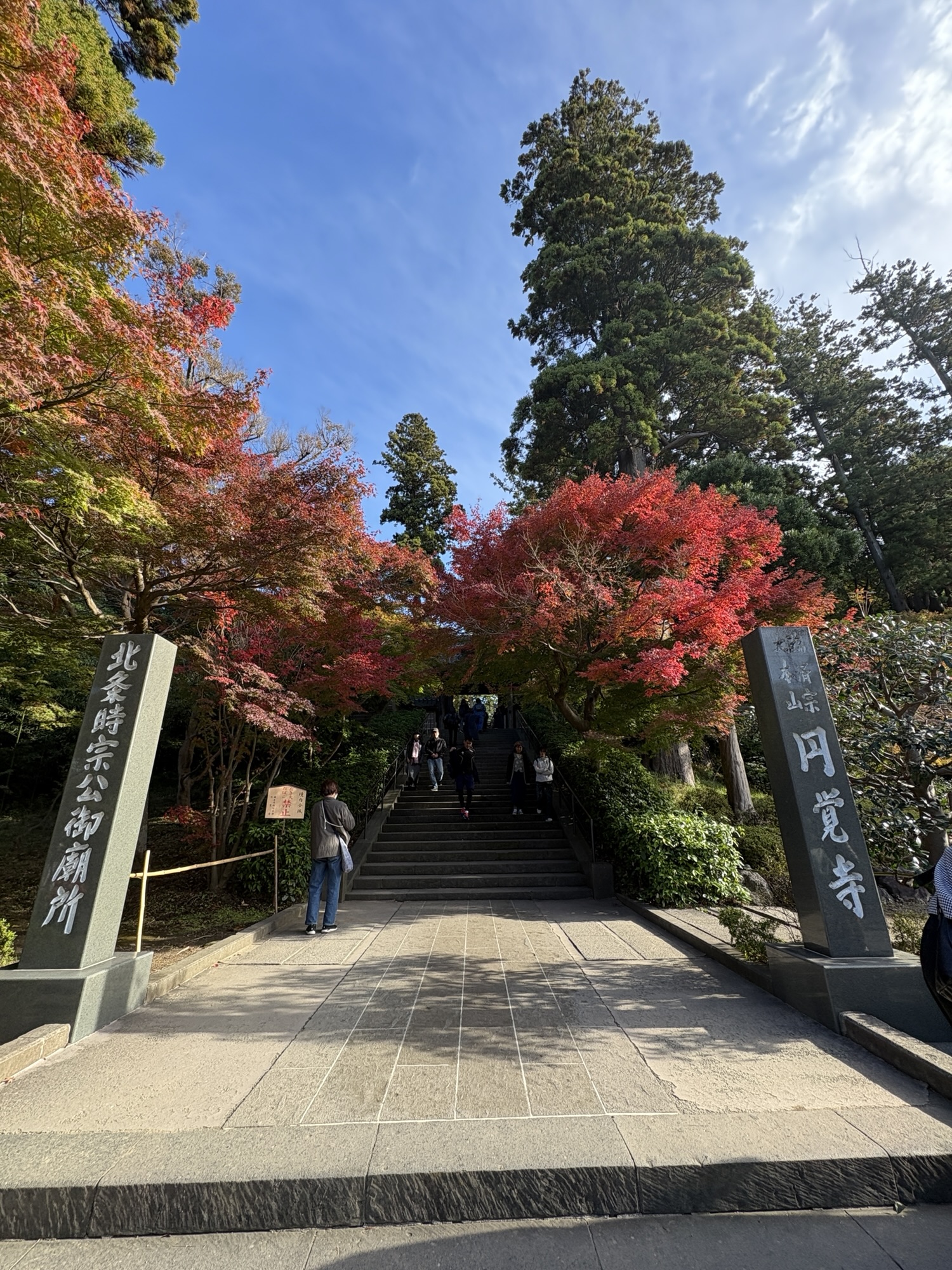

Have you ever been to Kamakura and have you walked around temples in Kamakura? Last autumn, the end of November, I visited Kamakura to see autumn view. From today, I’d like to show you temples in Kamakura!
First part is Engakuji Temple. It’s my most favorite temple in Japan. The location, atmosphere… Everything is perfect for me!
OK! Let’s get start to short guide!
***Are you looking for hotels in Kamakura? Agoda will help you!***

Contents
1. Kamakura Gozan: A Legacy of Zen Temple

Engakuji is one of the “Kamakura Gozan” (Five Great Zen Temples of Kamakura), a prestigious group of temples established to promote Zen Buddhism during the Kamakura period.
These temples served as cultural and spiritual hubs. They are influencing both the samurai class and artistic traditions like ink painting and poetry. Engakuji ranks second among the Gozan, reflecting its significant role in Zen practice and Kamakura’s history.
2. The History of Engakuji

Engakuji was established in 1282 by the Zen monk Mugaku Sogen, under the patronage of Hojo Tokimune. He is a powerful regent of the Kamakura shogunate. Tokimune, a member of the influential Hojo family, was deeply devoted to Zen Buddhism. He sought to promote its teachings as a guiding philosophy for the samurai class.
The founding of Engakuji was closely tied to the Mongol invasions of 1274 and 1281, as Tokimune created the temple to honor the fallen warriors from both sides and to pray for universal enlightenment. The temple’s name, meaning “perfect enlightenment,” reflects its spiritual purpose of transcending conflict and fostering peace.

The Hojo family’s connection with Engakuji extended beyond its founding. As prominent supporters of Zen Buddhism, the Hojos funded the construction of other Kamakura Gozan temples and helped shape the cultural landscape of the Kamakura period. Engakuji flourished under their patronage, becoming a center for Zen practice and education.
The temple’s design and structure were influenced by the Hojo family’s vision of harmonizing spirituality with natural beauty. Over the centuries, despite facing challenges such as fires and wars, Engakuji has remained a testament to the enduring legacy of the Hojo family and their contributions to Japanese Zen Buddhism.
3. Quiet Places for Reflection

Engakuji is a sanctuary of calm. As you walk through the temple grounds, you’ll find peaceful corners perfect for meditation or quiet contemplation. The Hojo (abbot’s quarters) garden, with its minimalist Zen design, is an ideal spot to relax and connect with nature. You can also listen to the soothing sound of rustling bamboo and chirping birds, away from the bustling city.
4. Stunning Views to Soak In

Don’t miss the stairs leading up to the Butsuden (Main Hall). From this vantage point, you can admire the temple’s architecture against the backdrop of Kamakura’s lush hills. The climb to Shariden (Reliquary Hall) offers a serene path lined with ancient trees.

And from the top, you’ll enjoy a sweeping view of the temple complex below. For an even grander view, venture to the top of the hill near Engakuji for a glimpse of Mt. Fuji on a clear day.
Getting There:
Engakuji is a short 2-minute walk from Kita-Kamakura Station, making it an accessible stop on your Kamakura adventure.
Pro Tip:
Visit early in the morning to experience the temple at its quietest and most serene.
5. Conclusion

To sum up, Engakuji is a place where history, spirituality, and nature blend seamlessly. Also, it offers an unforgettable experience for visitors seeking tranquility and inspiration. That’s my most favorite temple where I’ve been to.
If you have a plan to trip in Kamakura, I recommend you to visit Engakuji!

Leave a Reply