
Contents
1. Introduction: Sitting Still in a Fast-Moving World
In today’s busy world, where our attention jumps from one screen to another, Japan offers an ancient way to reconnect with silence — Zazen, or seated Zen meditation. More than just sitting quietly, Zazen represents the very heart of Japanese philosophy: finding peace through simplicity.
For centuries, monks in Japan have practiced Zazen as a way to calm the mind, understand themselves, and see the world more clearly. Today, many temples open their doors to visitors who want to experience this practice for themselves.
If you stay at a Zen temple in Kyoto or Kamakura, you can often join an early morning Zazen session before breakfast. The crisp air, the scent of incense, and the sound of a bell marking the beginning of meditation — everything about this experience feels like stepping into another time.
Zazen isn’t only for monks or spiritual seekers. It’s a quiet moment to pause, breathe, and simply “be.” For travelers visiting Japan, it’s a chance to experience a different side of the country — one that goes beyond sightseeing and connects you with the quiet rhythm of Japanese life.
***Are you looking for hotel in Japan? Agoda will help you!!!***

2. The Philosophy Behind Zazen

At its core, Zazen means “seated meditation.” But the concept goes far beyond just sitting still. It’s about being fully present — aware of your breath, your thoughts, and your surroundings without trying to control them.
The practice comes from Zen Buddhism, introduced to Japan from China in the 12th century. Over time, it shaped not only religion but also Japanese aesthetics and culture — from the minimalism of architecture to the calmness of a tea ceremony.
When you sit in Zazen, you are asked to straighten your back, fold your legs, and let your breath flow naturally. The goal is not to “empty your mind,” but to simply notice it. Thoughts come and go — you just observe them, without judgment.
This idea of non-attachment (letting go of control and expectation) is central to Zen. It’s reflected in everything from Japanese gardens, where every rock and ripple has meaning, to the art of calligraphy, where each brushstroke is both deliberate and spontaneous.
As one Zen master once said:
“When you sit, just sit. When you walk, just walk.”
Zazen is not about escaping reality, but embracing it fully — moment by moment.
3. The Zazen Experience: What to Expect

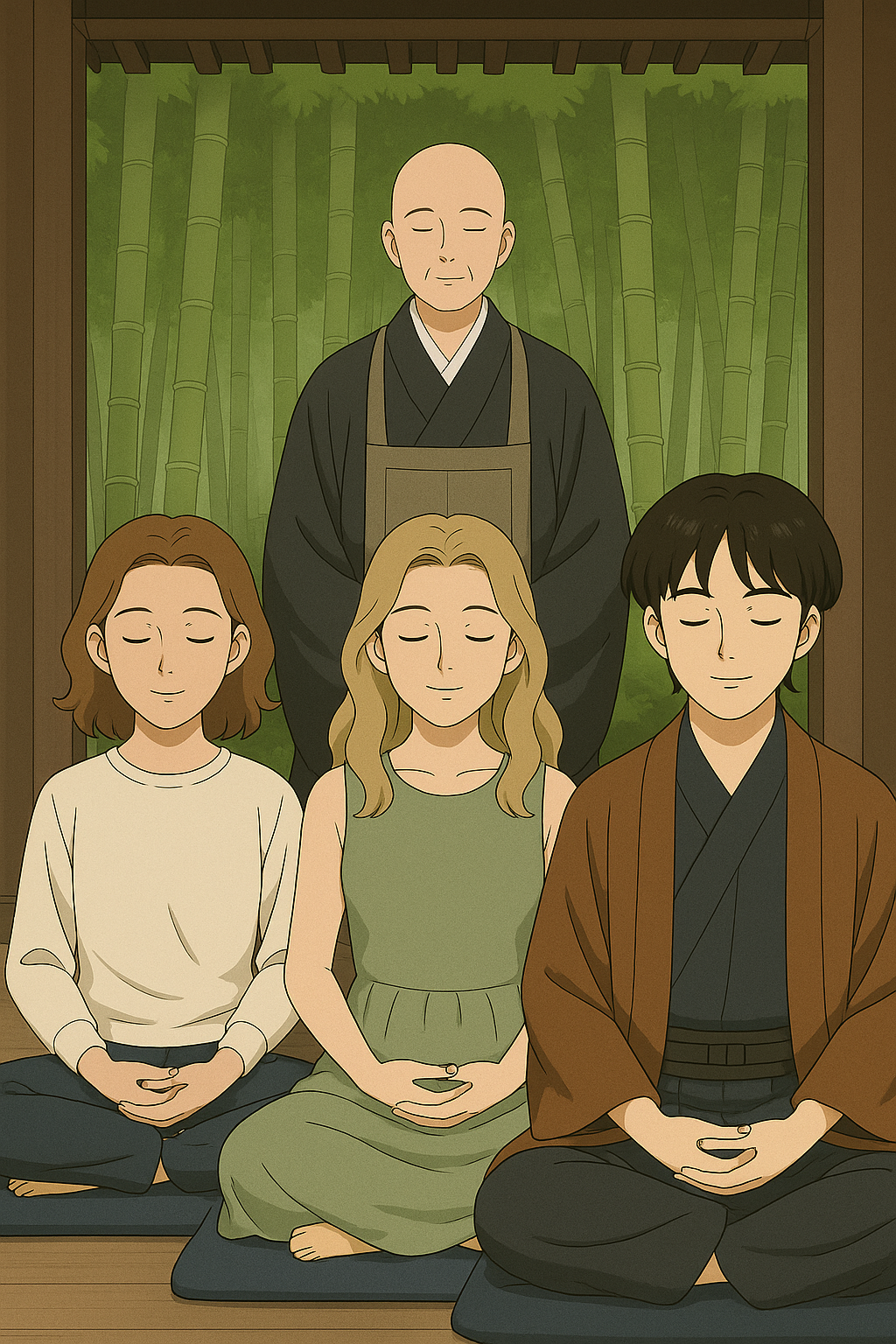
If you join a Zazen session at a temple, the first thing you’ll notice is the silence. The room, often called the zendō (禅堂), is simple — wooden floors, tatami mats, and perhaps a single flower or scroll.
🪷 The Beginning
A monk or instructor will explain the posture:
- Sit cross-legged (in full or half-lotus if possible)
- Keep your back straight
- Rest your hands in your lap (left hand over right, thumbs lightly touching)
- Keep your eyes slightly open, gazing downward
Then, a small bell rings. The meditation begins.
At first, you might feel discomfort in your legs or impatience in your mind. But as you continue to breathe, you start noticing small things — the creak of the floor, the cool air touching your skin, the faint chirp of a bird outside.
That’s when Zazen quietly begins to work.
You may also hear the sound of the kyosaku (警策) — a wooden stick used by monks to gently tap participants who appear sleepy or distracted. It’s not punishment; it’s a reminder — to wake up, to return to awareness.
🪶 Duration
A typical session lasts between 20 and 40 minutes, sometimes followed by walking meditation (called kinhin). Many temples offer short sessions for beginners with English guidance.
After meditation, participants often share tea or quietly reflect on their experience.
Zazen doesn’t give instant peace like a spa treatment — but it offers something deeper: clarity. When you stand up after the session, the world feels quieter, lighter, and more alive.
4. Where to Try Zazen in Japan
You don’t need to be Buddhist to experience Zazen — many temples across Japan welcome travelers from all over the world. Here are some recommended spots for first-timers:
🏯 Kyoto – Nanzen-ji & Shunko-in Temple
- Kyoto is the center of Zen culture.
- Shunko-in Temple offers English-guided meditation sessions and even short temple stays.
- The environment is welcoming for beginners and includes explanations of Zen philosophy.
🌸 Kamakura – Kencho-ji & Engaku-ji Temples
- Kamakura is another major Zen hub near Tokyo.
- Some temples hold early morning Zazen sessions for visitors.
- The setting — quiet forests and sea breezes — creates the perfect mood for meditation.
🌿 Hidden Gems
If you prefer off-the-beaten-path spots, try smaller temples in Nagano, Yamanashi, or Shikoku. Many local temples now collaborate with tourism offices to offer short, English-friendly Zazen workshops.
Tip: Search for “Zazen experience Japan” or “Zen meditation temple near me” — many places accept reservations through official websites or platforms like Voyagin or Klook.
5. Why Every Traveler Should Try Zazen
Zazen may seem simple — just sitting. But in that stillness, you discover a profound part of Japanese culture: the beauty of doing less.
Travel in Japan often means rushing between shrines, shops, and restaurants. But the real magic of Japan lies in the quiet moments — a cup of tea, the sound of rain, a slow breath. Zazen helps you feel that.
By experiencing Zazen, you’re not just learning meditation — you’re stepping into a tradition that shaped Japan’s art, design, and daily life for over 800 years.
It’s also one of the best ways to Avoid Overtouring: instead of crowded tourist spots, you find peace in small temples and local communities.
When you leave the temple, you might notice something subtle: your footsteps are slower, your mind calmer, your appreciation deeper. That’s Zazen’s quiet gift.

🌸 Conclusion: Sitting Still to Discover Japan
Zazen is more than an ancient Buddhist practice — it’s a mirror of Japan’s heart.
It teaches us that peace doesn’t come from doing more, but from being present.
Whether you’re a spiritual traveler, a culture lover, or simply someone curious about Japan beyond its famous landmarks, try sitting in silence for a while.
You might just discover — like many before you — that the journey inward can be the most beautiful journey of all.

Leave a Reply