
Christmas is one of the most widely celebrated holidays in the world.
But while the decorations, lights, and festive music may look similar at first glance, the meaning of Christmas—and how people actually spend the day—varies greatly from country to country.
In many parts of the world, Christmas is deeply rooted in family traditions.
In contrast, Japan has developed a completely unique way of celebrating Christmas—one that focuses more on romance than family.
In this article, we’ll explore how Christmas is commonly celebrated around the world, why family plays such an important role, and how Japan’s modern Christmas culture became something entirely different.
Contents
- Christmas Around the World: A Family-Centered Holiday
- Why Family Is So Important During Christmas
- Japan’s Christmas: A Completely Different Story
- Why Did Japan’s Christmas Become Romantic?
- Christmas Markets in Japan: A Romantic Experience
- What About Families in Japan?
- Same Holiday, Different Meanings
- Why This Cultural Difference Is So Fascinating
- Final Thoughts
Christmas Around the World: A Family-Centered Holiday

In Europe, North America, and many other regions, Christmas is first and foremost a family holiday.
For many people, Christmas means returning home. Offices close, schools are on winter break, and entire cities slow down. Trains and airports become crowded as people travel long distances just to be with their parents, grandparents, siblings, and relatives.
The heart of Christmas in these countries is togetherness.
Families decorate their homes with Christmas trees, ornaments, lights, and wreaths. Children help hang decorations, parents prepare traditional dishes, and grandparents often pass down recipes and customs that have been followed for generations.
Christmas Eve or Christmas Day is usually reserved for a large family meal.
Depending on the country, this may include roast turkey, ham, stuffing, potatoes, pies, or regional specialties. The table becomes a place not just for food, but for conversation, laughter, and reconnecting after a long year.
In many cultures, gift-giving is also centered around family. Parents give presents to children, siblings exchange small gifts, and everyone gathers around the tree to open them together. The joy comes less from the price of the gift and more from the shared moment.
For these countries, Christmas is about slowing down, expressing gratitude, and spending uninterrupted time with loved ones.

Why Family Is So Important During Christmas
The strong connection between Christmas and family is closely tied to history and religion.
In Christian traditions, Christmas celebrates the birth of Jesus Christ—a story deeply associated with family, care, and humility. Even in modern, secular societies, this idea of warmth and togetherness remains central to the holiday.
Over time, Christmas also became one of the few periods in the year when everyone is expected to stop working at the same time. This shared pause allows families to gather, regardless of busy schedules during the rest of the year.
As a result, in many countries, spending Christmas alone—or choosing not to visit family—can feel unusual. Christmas is emotionally framed as “the time to go home.”

Japan’s Christmas: A Completely Different Story

Japan, however, tells a very different Christmas story.
Christmas is not a national holiday in Japan. Offices remain open, schools do not close, and daily life continues almost as usual. There is no cultural expectation to return home or gather with extended family.
Instead, Christmas in Japan has evolved into a romantic event.
For many Japanese people—especially young adults—Christmas is similar to Valentine’s Day. It is a time to spend with a romantic partner rather than family.
Couples plan special dates weeks in advance. Popular activities include walking through illuminated streets, visiting Christmas markets, having dinner at restaurants, and exchanging gifts.
Hotels, restaurants, and theme parks often become fully booked on Christmas Eve, which is considered more important than Christmas Day itself.
Why Did Japan’s Christmas Become Romantic?
Japan’s unique Christmas culture did not develop naturally—it was shaped by modern marketing and post-war Western influence.
After World War II, Christmas was introduced to Japan mainly through advertising, movies, and popular culture. Instead of focusing on religious meaning, companies promoted Christmas as a stylish, Western, and aspirational event.
Department stores displayed Christmas decorations. Restaurants offered special “Christmas dinners.” Romantic movies and TV dramas reinforced the image of couples spending Christmas Eve together.
Over time, this image became deeply embedded in Japanese pop culture.
Because Christmas was not tied to traditional family customs or religion, it was free to become something new. Romance filled that space.

Christmas Markets in Japan: A Romantic Experience
In recent years, Christmas markets have become especially popular in Japan.
Inspired by European traditions, these markets offer wooden stalls, warm lighting, festive music, and seasonal food like sausages, hot wine, and sweets.
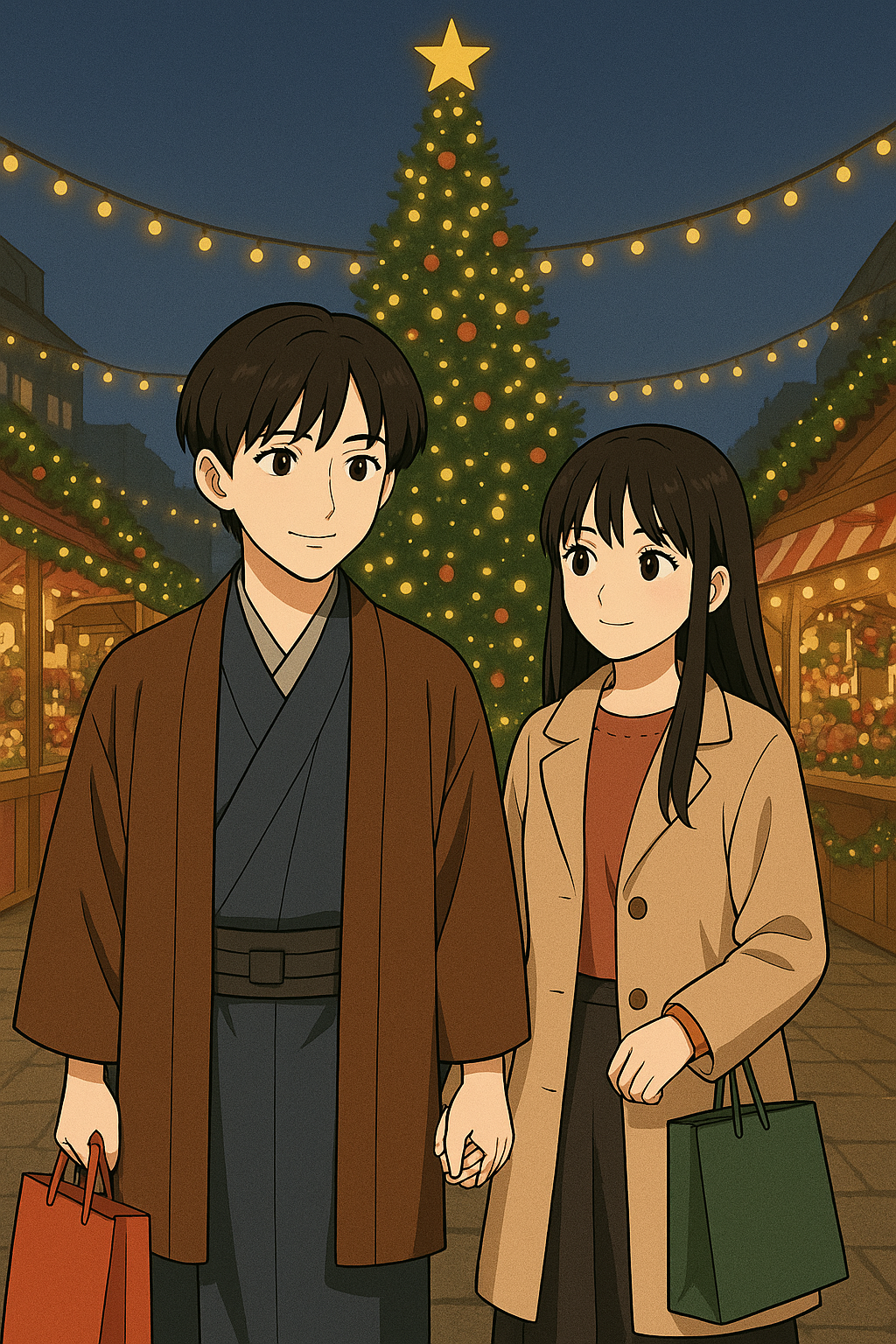
However, in Japan, Christmas markets are often experienced as date spots rather than family outings.
Couples stroll hand in hand, take photos in front of giant Christmas trees, share drinks, and enjoy the atmosphere together. The focus is not on tradition, but on mood.
This perfectly matches Japan’s modern Christmas identity: visually beautiful, emotionally intimate, and short-lived.
What About Families in Japan?
That doesn’t mean families in Japan don’t celebrate Christmas at all.
Some families decorate small Christmas trees at home. Parents may buy a cake—especially the famous Japanese strawberry shortcake—and exchange gifts with children.
However, these celebrations are usually simple and secondary. New Year’s is the true family-centered holiday in Japan, where traditions, travel, and family gatherings take priority.
In this sense, Japan separates the roles of holidays clearly:
- Christmas → Romance and atmosphere
- New Year → Family, tradition, and reflection
Same Holiday, Different Meanings

Christmas shows how the same holiday can take on completely different meanings depending on culture.
In many countries, it represents family, rest, and tradition.
In Japan, it represents romance, beauty, and shared moments between partners.
Neither way is better or worse—they simply reflect different cultural values and histories.
Understanding these differences helps us appreciate not just Christmas, but the diversity of how people around the world create meaning through celebrations.
Why This Cultural Difference Is So Fascinating
Traveling—or even just learning about other cultures—becomes more interesting when we look beyond surface-level similarities.
Lights, trees, and decorations may look familiar everywhere.
But how people feel about the holiday, who they spend it with, and what they value during that time can be completely different.
Christmas is a perfect example of how culture shapes tradition.
Same holiday.
Different vibes.
Final Thoughts
Christmas may be celebrated worldwide, but it is never exactly the same.
For some, it’s about family and returning home.
For others, it’s about romance and creating special memories with a partner.
And that contrast is exactly what makes Christmas—and cultural differences—so beautiful.
Leave a Reply