
1. Introduction: A Different Side of Tokyo

When people think of Tokyo, the same names often come up: Shibuya, Shinjuku, Asakusa, Akihabara.
They are exciting, energetic, and iconic—but they are also crowded, noisy, and increasingly overwhelming for travelers.
In recent years, many visitors have started asking a different question:
Is there a smarter way to experience Tokyo?
A way that feels modern, relaxing, and authentic—without fighting through crowds?
Takanawa Gateway is one of Tokyo’s most interesting answers to that question.
Opened as the newest station on the JR Yamanote Line, Takanawa Gateway was once considered a disappointment. At first, it attracted little attention, few visitors, and plenty of criticism. But in September of this year, everything changed. With the opening of Newoman Takanawa, the area transformed into a next-generation urban space that blends futuristic design, greenery, hotels, restaurants, and quiet public areas.
This is not a typical tourist destination.
And that is exactly why it matters.
In this guide, we’ll explore what Takanawa Gateway is, why it failed at first, how it was reborn, and why it deserves a place on your Japan travel itinerary—especially if you want to avoid overtourism and rediscover a new side of Tokyo.
2. What Is Takanawa Gateway and Where Is It?

Tokyo’s Newest Major Station
Takanawa Gateway Station officially opened in 2020 as the newest station on the JR Yamanote Line, Tokyo’s most important railway loop. This alone made it a major event—new Yamanote stations are extremely rare.
Located between Shinagawa and Tamachi, the station sits in a historically important area that once served as a gateway between Edo (old Tokyo) and the rest of Japan. The name “Gateway” reflects both this history and its future-focused vision.
Architecturally, the station immediately stood out. Designed with clean lines, natural light, and an open layout, it felt more like an airport terminal or a museum than a traditional Japanese train station. Wood accents, high ceilings, and a minimalist aesthetic gave it a calm, spacious atmosphere.
And yet, despite all this potential, something was missing.
Why Nobody Came at First
When Takanawa Gateway opened, many visitors were confused.
There were no major shops.
No attractions.
No clear reason to stop.
People expected a lively new hub, but instead found an empty, quiet station surrounded by construction zones. Social media quickly labeled it “boring” or “unfinished,” and travelers simply passed through without getting off the train.
In a city like Tokyo—where convenience and excitement are expected immediately—Takanawa Gateway felt like a failure.
But the truth is, it was never meant to succeed overnight.
3. The Turning Point: Newoman Takanawa and a September Transformation

A Long-Term Vision Finally Revealed
Takanawa Gateway was always part of a much bigger plan.
The station was only the beginning.
In September, the opening of Newoman Takanawa marked the real start of the area’s transformation. Rather than becoming just another shopping mall, Newoman Takanawa was designed as a next-generation urban complex—a place where people can stay, eat, relax, and connect with the city in a more sustainable way.
This redevelopment redefined the entire neighborhood.
Instead of loud advertisements and packed corridors, the space emphasizes openness, greenery, and balance. The result feels futuristic, but also human.
Not Just Another Shopping Complex
At first glance, Newoman Takanawa offers what many travelers expect:
Stylish shops Trend-focused boutiques Carefully curated retail spaces
But unlike typical commercial centers in Tokyo, shopping is not the main attraction—it is only one layer of the experience.
The real appeal lies in how seamlessly everything is connected.
4. Key Features: Why Takanawa Gateway Is Special

A Multi-Layered Urban Space
Takanawa Gateway is not just a station or a mall. It is a living urban environment.
Within the complex, you’ll find:
Hotels designed for both short stays and long-term travelers Restaurants ranging from casual cafés to refined dining Public spaces that encourage rest, not consumption
Everything feels intentional. There is room to walk slowly, sit quietly, and enjoy the space without pressure.
Restaurants with a View: The Indoor Garden Experience
One of the most impressive features is located high above the ground.
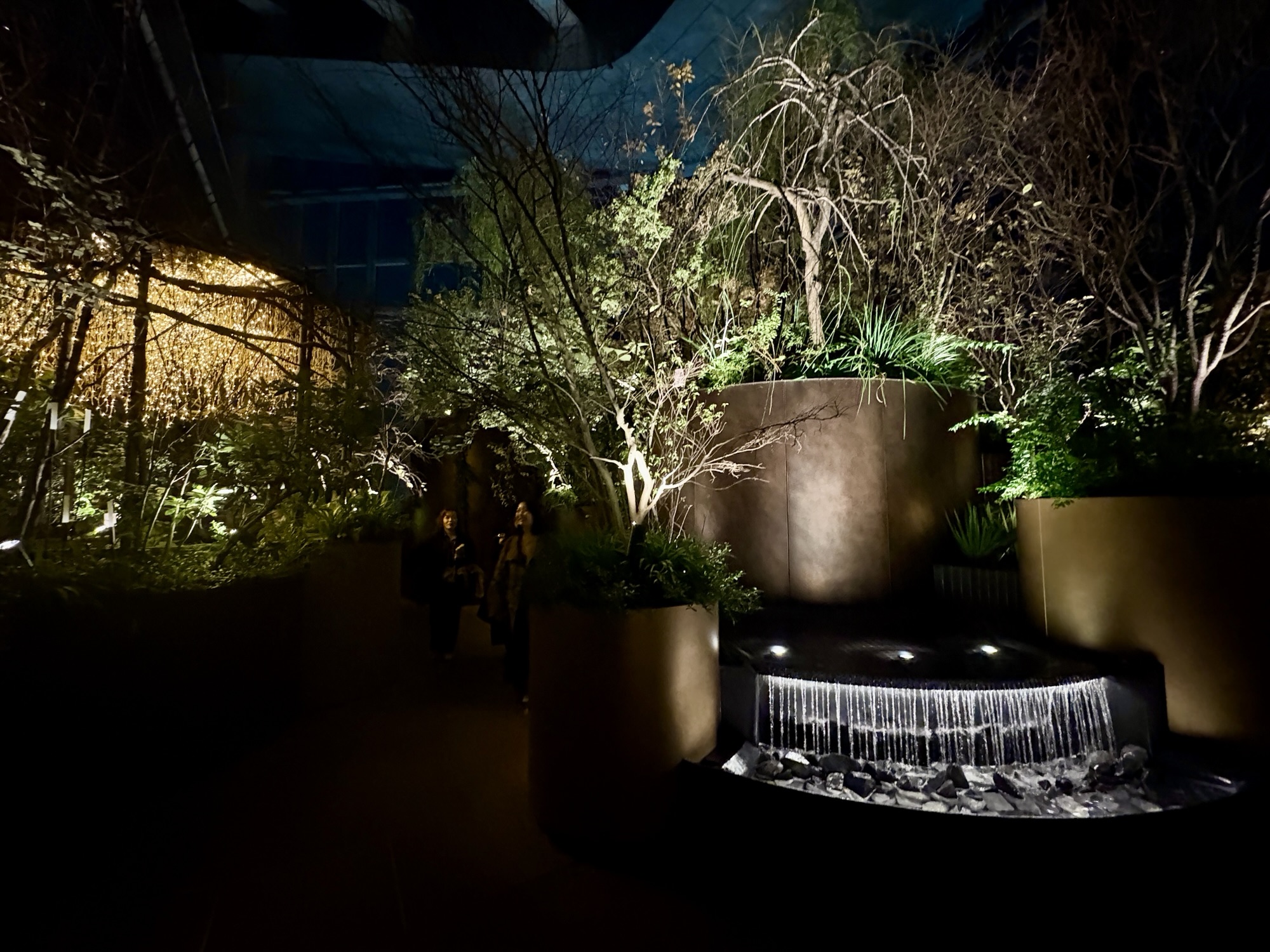
On the upper floors—around the 28th floor—you’ll find a restaurant area combined with an indoor garden. This space feels almost unreal: lush greenery surrounded by glass, overlooking the city.
It’s not loud.
It’s not rushed.
It feels like an oasis in the middle of Tokyo.
This is not just a place to eat. It’s a place to breathe.
Many visitors come here simply to relax—to read, talk, or quietly reflect. It’s the kind of place you don’t rush through, and that alone makes it rare in Tokyo.

A Space Designed for the Future
Everything about Takanawa Gateway suggests a new direction for Tokyo:
Fewer crowds, more space Less noise, more calm Less consumption, more experience
It reflects how cities might evolve in the future—not as places to rush through, but as environments to live in.
5. Why Travelers Should Care: Avoiding Overtourism
A Smarter Way to Explore Tokyo
Tokyo is facing the same challenge as many global cities: overtourism.
Famous areas are becoming overcrowded, local life is disrupted, and the travel experience becomes stressful for both visitors and residents.
Takanawa Gateway offers an alternative.

It is:
Easy to access Modern and visually striking Still relatively unknown to international tourists
This makes it perfect for travelers who want to explore responsibly—without contributing to congestion in already packed areas.
Ideal for Certain Types of Travelers
Takanawa Gateway is especially suited for:
First-time visitors who want a calm introduction to Tokyo Repeat travelers looking for something new Digital nomads and creatives Travelers who enjoy architecture, design, and urban spaces
If your idea of travel includes slowing down and observing daily life, this place will resonate with you.
6. When and How to Visit
Best Time to Go
Because it is not yet crowded, Takanawa Gateway can be enjoyed almost any time of day. However:
Weekday afternoons are especially quiet Evenings offer beautiful lighting and a relaxed atmosphere Rainy days add to the futuristic mood
Unlike traditional sightseeing spots, there is no “wrong” time to visit.
How Long Should You Stay?
You don’t need an entire day.
Even 1–2 hours is enough to explore the area, enjoy a meal, and relax in the indoor garden.
That makes it a perfect stop between destinations—or a calm break during a busy travel schedule.
7. A Symbol of Re-Discovering Japan

Takanawa Gateway represents something bigger than a station or a development project.
It symbolizes a shift in how Japan presents itself to the world:
From fast to thoughtful From crowded to balanced From famous to meaningful
For travelers willing to look beyond the obvious, places like this reveal a deeper beauty—one that cannot be captured by famous landmarks alone.
8. Conclusion: Is Takanawa Gateway Worth Visiting?

Yes—but not for everyone.
If you are looking for loud attractions or traditional sightseeing, you might find it “quiet.”
But if you value design, calm spaces, and the future of cities, Takanawa Gateway is absolutely worth your time.
It failed once because people expected instant excitement.
Now, it succeeds because it offers something better.
This is Tokyo reimagined.
This is Japan rediscovered.
And this is a place you’ll be glad you didn’t skip.
Leave a Reply