
Contents
- 1. “Can We Really Do Biei and Asahikawa in One Day?”
- 2. Starting the Day at Asahikawa Airport (Around 9:00 AM)
- 3. Winter Biei: A White Version of Famous Blue Spots
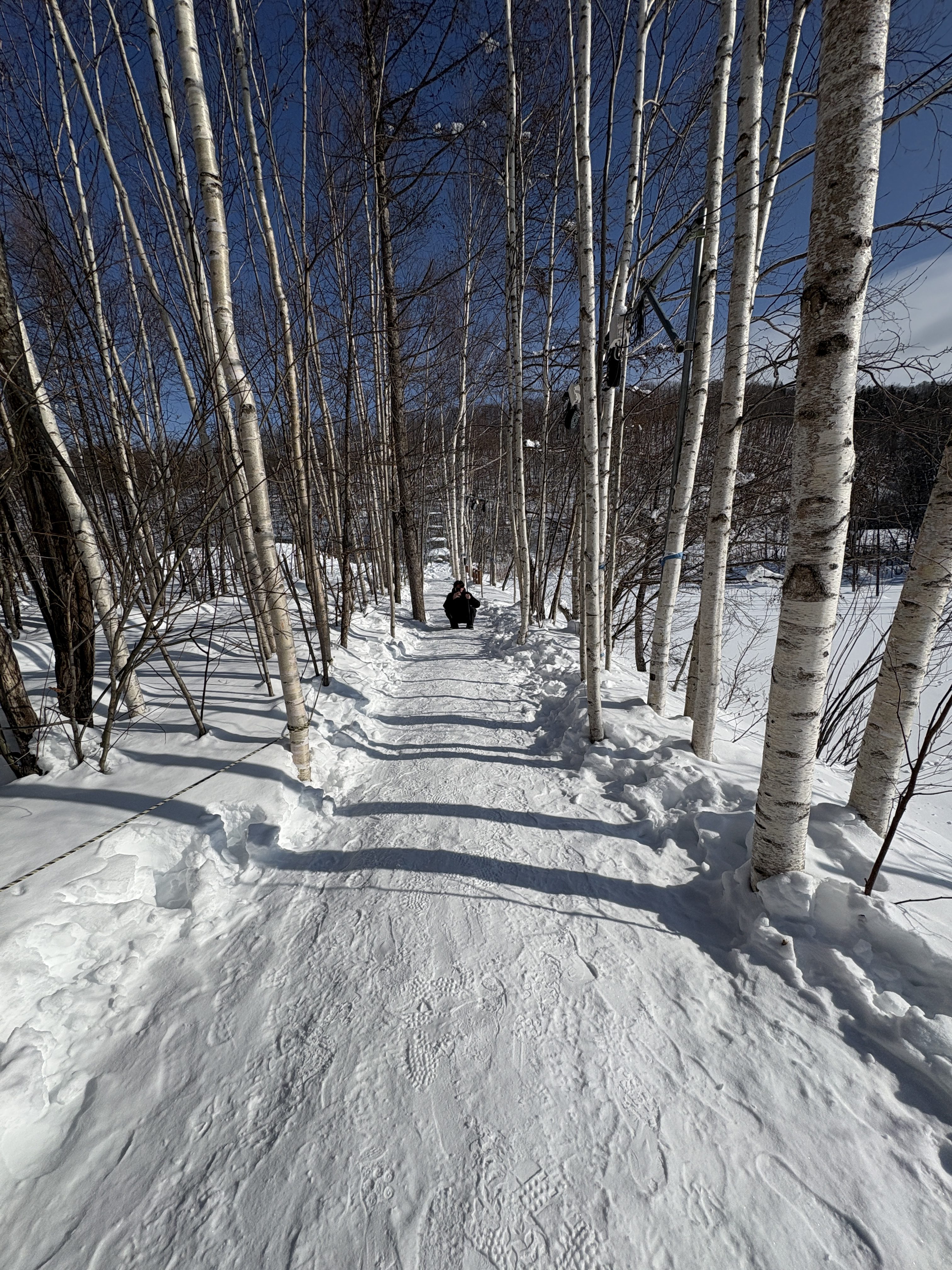
- 4. The Silent Beauty of Biei’s Snowy Hills
- 5. Lunch at a Farm Restaurant: Slowing Down on Purpose
- 6. Standing in Front of the Dam: Feeling How Big Hokkaido Is
- 7. Back to Asahikawa City: A Quiet Shrine in a Snowy World
- 8. Ending the Day at Ramen Village (And Why It Works)
- 9. Is This Day Trip Right for You?
- 10. Final Thoughts: You Don’t Need to See Everything
1. “Can We Really Do Biei and Asahikawa in One Day?”

When you hear the names Biei and Asahikawa, they sound big.
They feel like places that need several days, careful planning, and a lot of energy. When you look at a map, the wide empty spaces between spots can quietly increase that feeling. You might be thinking, “This looks beautiful, but is it realistic for one day?” You are not wrong to feel that way.
For many first-time visitors to Hokkaido, the real fear is not missing famous places. It is ending the day exhausted, stressed, and unsure whether the plan was too ambitious. That uncertainty alone can stop you from trying.
What I learned on this trip is simple but important. The difficulty is not distance. It is imagining the flow of the day. Once the order becomes clear, once you understand how the morning leads naturally into the afternoon, the idea of a day trip suddenly feels calm instead of risky.
This article is not about doing everything. It is about showing you how one relaxed day in central Hokkaido can work, starting from Asahikawa Airport and moving at a human pace.
2. Starting the Day at Asahikawa Airport (Around 9:00 AM)
I arrived at Asahikawa Airport a little after 9 a.m.
This choice already solves half of the problem. Compared to starting from Sapporo, the airport is much closer to Biei, which immediately reduces both travel time and mental pressure. You do not feel like you are “catching up” from the start.
After arriving, the first decision was transportation. Whether you choose a rental car or another option, the key idea is the same: today is not about rushing. We picked up the car, adjusted the seats, and took a moment to breathe. That short pause mattered more than it sounds.
As we left the airport, the scenery slowly changed. Snow-covered fields stretched out, and the roads felt quiet and open. There was no dramatic moment, just a gradual shift into a slower rhythm. This is where the day really begins. When you accept that the morning sets the mood, not the checklist, the rest becomes easier.
3. Winter Biei: A White Version of Famous Blue Spots

Our first destination was the Blue Pond in Biei.
Many people imagine this place as bright blue, especially if they have seen summer photos. But in winter, the experience is completely different. The pond becomes white and silent, surrounded by snow-covered trees. Instead of color, texture takes center stage.
Standing there, I realized how seasons reshape places. The same location can tell a totally different story depending on when you visit. In winter, the Blue Pond feels calm and introspective rather than dramatic. You do not stay long, but the stillness stays with you.

Nearby, we visited Shirahige Falls. Warm water flows down and meets the cold air, creating soft steam that rises slowly. The sound of water under ice feels gentle, not powerful. This contrast between movement and quiet makes the place memorable without overwhelming you.
When taking photos here, I noticed something important. Winter spots reward patience more than angles. If you wait a little, watch how the steam moves, and let the scene settle, the photos naturally improve. More importantly, the moment itself feels fuller.
4. The Silent Beauty of Biei’s Snowy Hills

After visiting the famous spots, we drove through the hills of Biei.
This part of the trip is not marked by signs or names. There is no “must-see” label telling you where to stop. And that is exactly why it works.
The hills stretch endlessly, covered in white, with gentle curves that feel almost unreal. The absence of crowds and noise allows you to feel the size of Hokkaido in a quiet way. You are not told what to admire. You simply look until something feels right.
We stopped a few times without planning to. Each stop was short, but meaningful. This freedom—stopping because you want to, not because you should—creates a deep sense of satisfaction. It reminds you that travel does not always need explanation.
If you are worried about doing “enough” in one day, this part helps reset that mindset. Sometimes, doing less lets you feel more.
5. Lunch at a Farm Restaurant: Slowing Down on Purpose

By midday, we were ready for lunch.
Instead of heading straight back to the city, we chose a farm restaurant in Biei. This decision was intentional. Placing lunch here naturally divides the day into two gentle halves.
The food itself was warm and simple, perfect for a winter day. But more important than the meal was the pause. Sitting down, warming up, and letting the morning experiences settle gave the afternoon room to breathe.

Many itineraries treat lunch as something to get through quickly. Here, lunch became part of the experience. It slowed our pace without forcing it. When you plan rest into your route, you do not feel like you are “losing time.” You feel like you are gaining balance.
6. Standing in Front of the Dam: Feeling How Big Hokkaido Is

After lunch, we stopped by a dam nearby.
This is not a famous tourist attraction, and there are no big crowds or signs telling you what to feel. Yet standing there made the scale of Hokkaido clearer than any guidebook description.
The wide structure, the surrounding snow, and the quiet atmosphere create a sense of openness that is hard to put into words. You do not rush here. You stand, look, and let the cold air wake you up.
Moments like this often become the most memorable. They are not planned highlights, but emotional anchors. They remind you that travel is not only about famous places, but about how a place makes you feel when no one is telling you what to think.
7. Back to Asahikawa City: A Quiet Shrine in a Snowy World

In the afternoon, we slowly made our way back toward Asahikawa City.
Rather than jumping straight into busy streets, we visited Kamikawa Shrine first. Covered in snow, the shrine felt peaceful and grounded.
Walking through the shrine grounds, the city felt distant, even though it was nearby. This transition mattered. Moving gradually from nature to urban space helps your energy stay steady. You do not feel like the day suddenly changed direction.

The shrine visit did not take long, but it added emotional depth. It offered a moment of calm reflection, which balanced the movement of the day. For a winter trip especially, these quiet stops make the experience feel complete.
8. Ending the Day at Ramen Village (And Why It Works)

As evening approached, we headed to Asahikawa Ramen Village.
After spending the day in cold air, warm ramen felt like a natural ending. This was not just about food, but about closure.

Choosing a clear final destination removes stress. You are no longer wondering what comes next. You can relax, enjoy the meal, and reflect on the day. Knowing that a flight back to Tokyo was coming made this stop even more satisfying.
Ramen Village works well because it is easy, warm, and comforting. It does not demand extra planning or energy. At the end of a full but relaxed day, that simplicity is exactly what you want.
9. Is This Day Trip Right for You?
This day trip is ideal if you enjoy balance.
If you want nature, city, food, and rest to exist together without pressure, this route fits well. It is especially good for travelers who are new to Hokkaido but ready to go beyond Sapporo.
If you prefer very packed schedules or dislike winter conditions, you may want to adjust the plan or choose a different season. The value of this itinerary is not in copying every stop, but in understanding its structure.
Once you see how the day flows, you can adapt it to your own pace and interests.
10. Final Thoughts: You Don’t Need to See Everything

You do not need to see everything in one day.
This trip showed me that central Hokkaido is best enjoyed through rhythm, not speed. By choosing a calm route and accepting natural pauses, the day felt full without feeling heavy.
Biei and Asahikawa are places that invite return. A good day trip does not close the story. It opens it.
***More Hokkaido Information***
Leave a Reply