

Revised: August 10th 2026
Wait — this is still Tokyo?
That’s the question almost everyone asks the first time they step off the train in Okutama. The crowded scramble crossings, the vending machines on every corner, the low hum of the city — all of it disappears, replaced by cedar-covered mountains, a jade-green lake, and air that actually smells like water and pine. And yet, technically, administratively, you have not left Tokyo at all. Okutama is the westernmost edge of the Tokyo metropolis, and in summer, it might be the single best argument for staying in the city rather than fleeing it.
If you’re visiting Japan in July or August and dreading the heat, this is the piece to bookmark.
Why Okutama Works as a Summer Escape
Tokyo summers are famously brutal — thick humidity, temperatures that sit stubbornly in the mid-30s°C, and city concrete that holds the heat well after sunset. Okutama solves this simply by being higher up and heavily forested. The temperature difference between central Tokyo and Okutama can run several degrees cooler, and the shade from the mountains makes an enormous difference on the ground. Locals treat it the way people elsewhere treat a lake house: somewhere close enough for a day trip, remote enough to forget your inbox exists.
It’s also, refreshingly, not on the well-worn Kyoto–Osaka–Hakone circuit most first-time visitors follow. If you’ve already ticked off the major sights and want a day that feels genuinely local rather than staged for tourists, Okutama delivers that.

Getting There
Okutama is reachable entirely by train, which makes it an easy, low-stress add-on to a Tokyo itinerary — no car required.
- From Shinjuku Station, take the JR Chuo Line, then transfer onto the JR Ome Line toward Okutama Station. The full journey takes a little under two hours.
- If you want a quieter, more atmospheric stop en route, get off one station early at Shiromaru Station — a small, unstaffed platform tucked into the mountainside that feels more like a movie set than a functioning part of the Tokyo rail network.
- Once in the area, local buses connect the station to the lake, the cave, and the main trailheads, so you don’t need to drive.
Good to know: IC cards (Suica/Pasmo) work the entire way, so there’s no need to buy separate tickets.

Nippara Limestone Cave

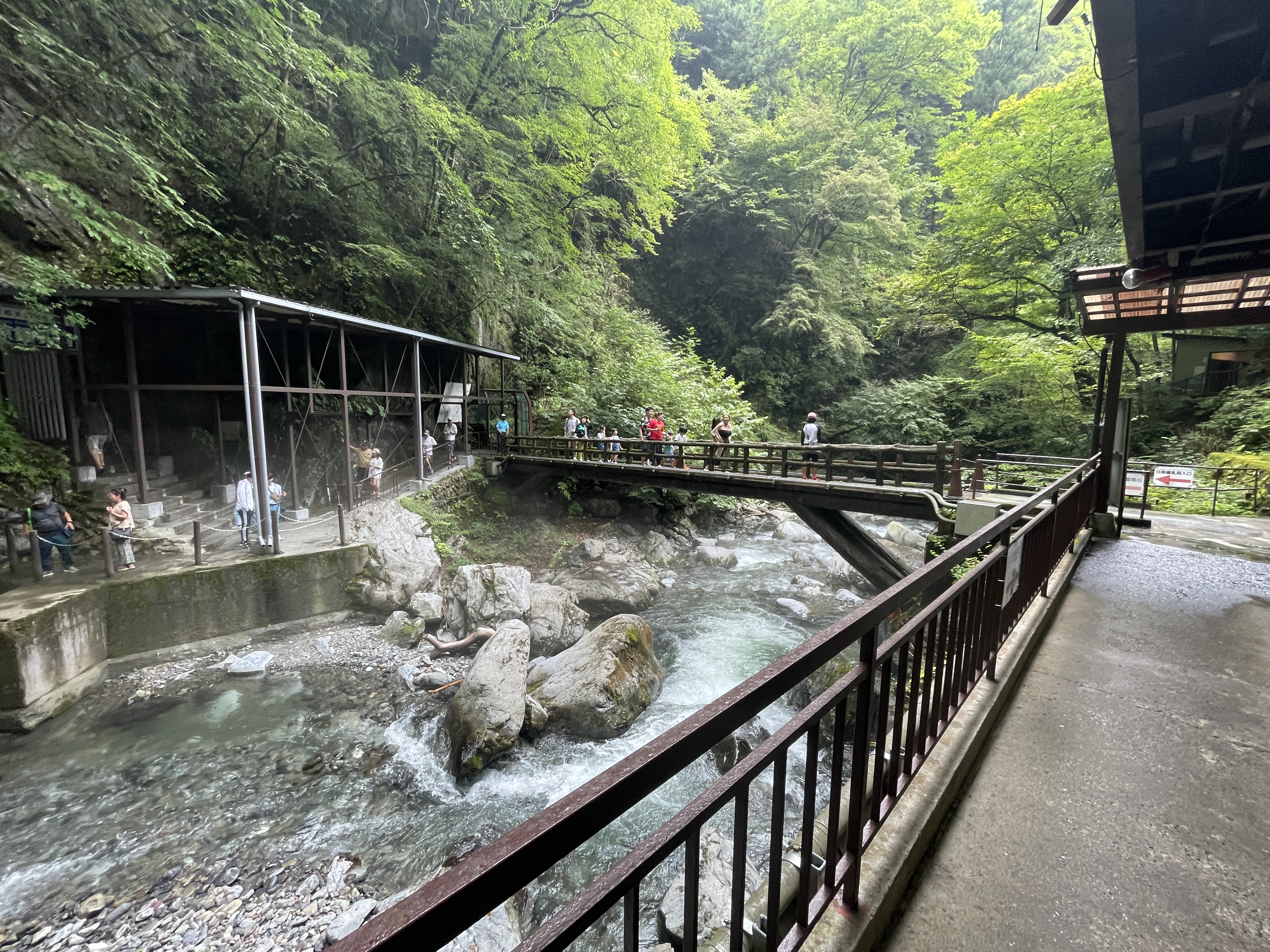
Okutama’s most unusual attraction isn’t a shrine or a viewpoint — it’s underground. The Nippara Limestone Cave (日原鍾乳洞), formed over millions of years, winds through chambers of stalactites and stalagmites lit just enough to feel eerie rather than kitschy. It’s a relatively compact cave, walkable in well under an hour, but the geology is genuinely striking, and it’s a rare chance in Japan to explore a proper cave system rather than a recreated tourist attraction.
Practical tip: the cave sits at a constant, cold temperature year-round — noticeably chilly even in the height of summer. Bring a light long-sleeve layer even if you’re sweating on the walk up; the contrast catches almost everyone off guard.

Okutama Lake

Here is another sightseeing spot in Okutama. It’s Okutama lake. Hopefully, It was sunny day so we could see beautiful view.

A short bus ride from the cave brings you to Okutama Lake, formed by the Ogouchi Dam, completed in 1957 and still an impressive piece of postwar engineering. The lake sits inside Chichibu-Tama-Kai National Park, and on a clear day the water turns a deep, almost unnatural blue-green against the surrounding peaks.
There’s more here than a photo stop:
- Hiking — trails along the lakeshore range from easy strolls to longer forest routes with elevated viewpoints.
- Kayaking and small boat rental — a good option if you want to get out on the water rather than just look at it.
- Fishing — the lake is stocked with trout and bass, and rod rental is available locally for those without gear.
- The Okutama Mukashi Michi (奥多摩むかし道) — a historic trail once used to transport construction materials for the dam, now a peaceful walking path lined with old shrines, stone markers, and forest scenery. It’s one of the better ways to feel the area’s history rather than just its landscape.

Who This Trip Suits
Okutama isn’t a big-name landmark, and that’s exactly its value. It’s a strong fit if:
- You want one genuinely quiet, nature-forward day inside an otherwise packed Tokyo itinerary
- You’re visiting in summer and need real relief from the heat, not just an air-conditioned mall
- You’ve already done the major Tokyo sights and want something that feels local rather than curated for visitors
- You care about spreading your time (and spending) beyond the most crowded parts of the city — which, quietly, is also good for the places that don’t see over-tourism pressure
Planning Your Day
A comfortable day trip looks like: morning train out via Shinjuku, cave visit late morning (before it gets crowded), lakeside lunch, then either a short lake walk or a stretch of the Mukashi Michi in the afternoon, heading back before evening. Give yourself the full day — the value of Okutama is in the pace, not in rushing between two photo spots.
Before you go:
- Check bus timetables in advance — services between the station, the cave, and the lake run less frequently than central Tokyo trains
- Bring cash for smaller local shops and the cave entrance, alongside your IC card for transit
- Pack layers: warm and humid at the station, noticeably cooler by the lake, cold inside the cave
Okutama won’t be on anyone’s “first time in Tokyo” checklist, and that’s precisely why it’s worth the two hours. It’s the version of the city almost no visitor sees — and, for one summer day, the version that might make you forget you’re in a city of 14 million people at all.
Planning your trip? Booking accommodation or activities in the Okutama/Oume area in advance is worth it in peak summer weekends —


Leave a Reply