

Have you ever been to Izakaya? Did you enjoy Izakaya experience in Japan?
I like to have a dinner in an Izakaya with a friend of mine and my colleagues. At least twice a month, I go there.
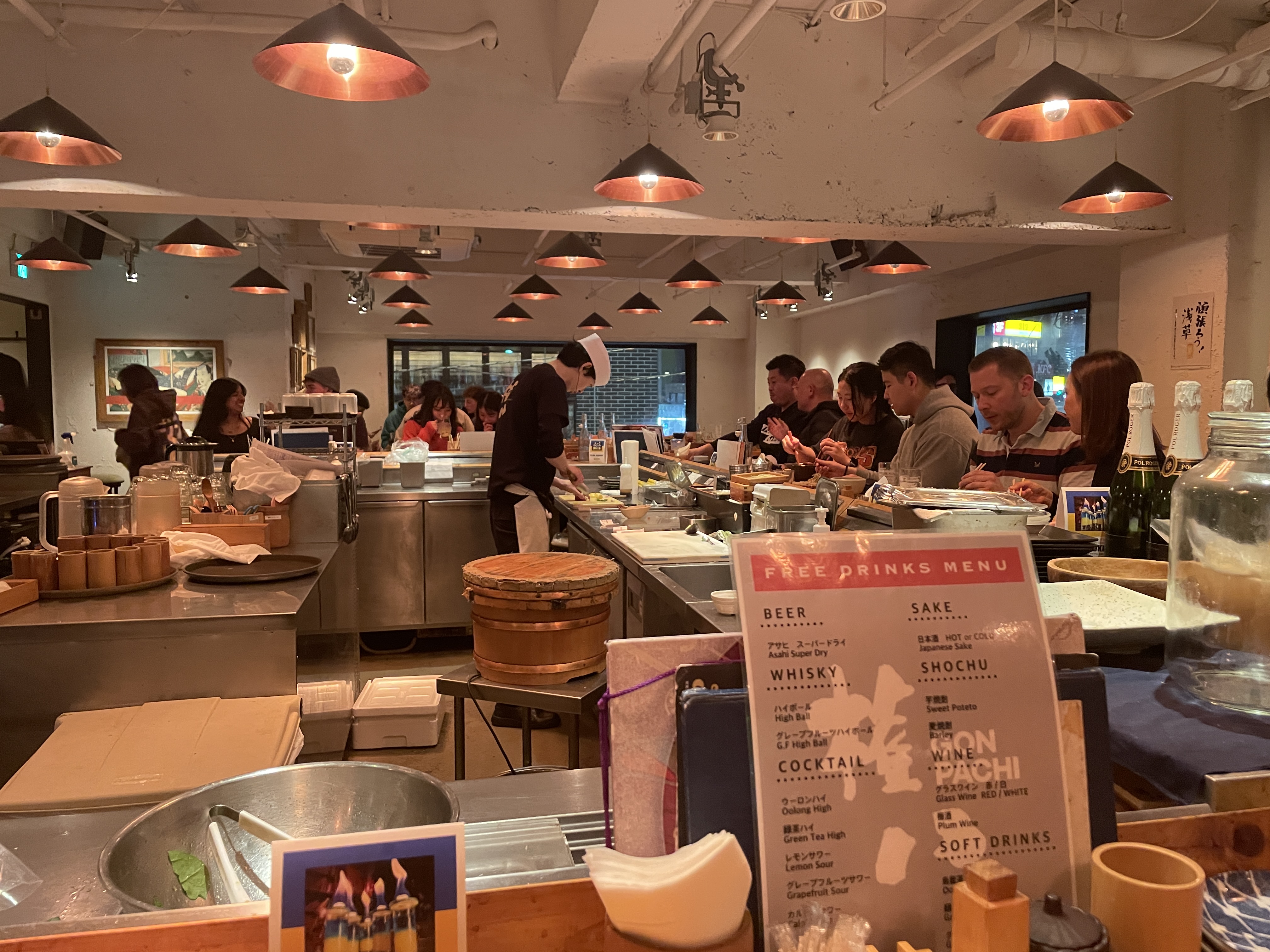
Last time, I went to Gonpachi, which is a famous Izakaya for tourist from another country, in Asakusa with a friend of mine, I saw a couple from Singapore next to us. They look like a little bit nervous. I thought they didn’t know how to order and what they had to have cuisine. Plus, a staff who didn’t use English took care of them. They just ordered one beer and four Yakitoris. That’s it.
Even if Gonpachi has English menu, if customers don’t know how to order, they won’t enjoy Izakaya.
To solve this problem, I’d like to introduce how to enjoy Izakaya for visitors! There are many contents so, please check my page and I hope you to be happy in Izakaya!
1. Introduction
1.1. What is an Izakaya?

To begin with, what’s Izakaya? What’s the difference between a bar in your country? Izakaya is translated “Japanese Bar” in English so, both of them are place to enjoy having a glass of alcohol and foods with friends.
The word “Izakaya(居酒屋)” is derived from “i(居)” (to stay) and “sakaya(酒屋)” (sake shop), which reflects its origin as a place where customers could sit and drink sake.
1.2. The cultural significance of Izakaya in Japan

Izakayas hold a unique and significant place in Japanese culture, serving not just as places to eat and drink but as social hubs that foster community and connection.
First of all, Izakaya is a place where people feel free to access and talk with friends having a glass of beer and dishes. Unlike some high-end restaurants that can be formal and exclusive, izakayas are casual and accessible to everyone. They welcome all kinds of patrons, from blue-collar workers and salarymen to students and tourists. This inclusivity helps foster a sense of community and belonging.
Also, Izakaya makes customers’ connection be stronger. Izakaya is one of a social gathering spot. Izakayas are central to Japan’s social fabric, providing a relaxed environment where people can unwind and socialize. After a long workday, colleagues often gather at an izakaya to de-stress, discuss work matters, and bond over drinks and food. This practice, known as “nomikai(飲み会)” (drinking party), is integral to workplace culture and team building.
2. Finding the Right Izakaya

Basically, Izakaya has two types. Popular Izakaya Chains and Local gems.
To start to enjoy Izakaya, I recommend you to choose Izakaya Chains because, English menus are available and many part-time workers are working especially university students. Some of them can speak English so, you’ll be able to communicate with staffs.
Also, there are many kinds of food menus so, you have many choices to have cuisine.
However, considering to freshness of ingredients, local gems are better. Local gems have a contract with farms and fishing ground directly. They send fresh ingredients directly to Izakaya so, customers enjoy to have a texture, tastes of cuisines.
But, to see from communication, it might be difficult for you to talk with staffs…
Here is a list of popular Izakaya chains.
- Gonpachi(権八)
- Tsukada Farm(塚田農場)
- Isomaru Suisan(磯丸水産)
- Torikizoku(鳥貴族)
- Watami(和民)
- Hananomai(はなの舞)
- Uotami(魚民)
- Kyushu Necchuya(九州熱中屋)
3. Understanding the Menu
3.1 Common Izakaya dishes
This is my favorite part actually!
I’d like to introduce common dishes I always order and love.

Small dishes such as cartilige (Umesusyou:梅水晶),soybean (Edamame:枝豆).

Salad

Yakitori

Sashimi
3.2 Seasonal offering
Seasonal offerings at izakayas are a delightful aspect of dining in Japan, as they reflect the country’s appreciation for fresh, local ingredients and traditional food customs.
For example…

Spring: Spring’s Vegetable’s Tempura (like Nanohana:菜の花, Seri: 芹)

Autumn: Mashrooms cuisines

Winter: Hotpot
4. Izakaya Etiquette
4.1. How to enter and get seated

At first, try to make a reservation in the Internet. Search an Izakaya which you wanna go and book your number of party. Or call to the Izakaya but It’s super difficult.
If you can reserve your seat, when you open a door and tell your name who’ve made a reservation.
If you’ve not made a reservation, tell your number of party and follow the staff’s instruction. Sometimes, a staff may ask a type of table like window, outside, counter table. Tell your preference!
*Be careful, in famous place like Shibuya, and weekends, too many businessperson and visitors have already made a reservation and there are no vacancy table. I went to Shibuya’s Izakaya on weekends and forgot to make a booking, so I waited about 2 hours in a long quene.

4.2. Ordering protocols

It depends on an Izakaya but, in general After getting your seat, a staff come to a table to give you a hot towel and instruction how to order.
The order style is divided into two styles: first one is call a staff and order your dishes pointing a menu orally, second one is use a device.
If you familiar with Izakaya, you’ll be able to order first drink after a staff’s instruction.
4.3 Otoshi (Appetizer)

When the first drink is coming, at the same time, a staff give you an appetizer called Otoshi(お通し).
It is a small appetizer served at Izakayas in Japan, typically brought to the table shortly after customers are seated. It’s a unique and integral part of the Izakaya dining experience.
You might be surprised because you don’t order. However, otoshi means a cover charge. he cost of the otoshi is usually included in a small seating or cover charge known as “otoshi-ryo.” This fee is added to your bill, typically ranging from 300 to 600 yen per person.
Also, for Izakaya, Otoshi serves as a gesture of hospitality, welcoming guests and giving them something to nibble on while they browse the menu and decide on their orders. Plus, it is an opportunity to showcase their culinary skills and introduce guests to their style of cooking. It sets the tone for the meal and can leave a lasting impression.
Here is a common otoshi.
・Tsukemono (Pickled Vegetables): Simple but flavorful, often made from seasonal vegetables.
・Nimono (Simmered Dishes): Small portions of dishes like braised pork belly, simmered fish, or stewed vegetables.
・Sunomono (Vinegared Dishes): Light and refreshing dishes, such as vinegared cucumbers or seaweed.
・Aemono (Dressed Dishes): Ingredients mixed with dressings, such as spinach with sesame dressing.
・Sashimi: A few slices of fresh fish, showcasing the izakaya’s ability to handle raw seafood.
4.4. Payment practices

After complete your experience in Izakaya, you have to pay a bill.
Normally, payment type is in cash, by credit card, by IC card (Suica).
However, when you trip in countryside, or when you are in a local gems, card payments are not acceptable. You are better to prepare cash.
5. Tips for First-Time Visitors
5.1. Language tips and useful phrases

You know, it is difficult for first visitors to communicate with staffs because, people in Japan don’t use English. Of course you can order pointing a menu but, once you memorize following phrases, you’ll feel more smooth and enjoy Izakaya’s experience.
- ⚪︎人です(…ninn desu): (2,3) people: When you enter Izakaya and get seated.
- (窓側、カウンター、外)でお願いします: (Madogawa, kaunta-, soto)de onegaishimasu.: (Window, Counter, Outside) table, please: show your table preference.
- (ビール、刺身、焼き鳥)ください: (bi-ru, sashimi, yakitori)kudasai: I’ll go for, Can I get (beer, sashimi, yakitori): to order your dishes and drink.
- オススメはなんですか?: Osusume ha nann desuka?: What’s your recommendation? : When you can’t decide your order.
- お会計お願いします: Okaikei onegaishimasu. : Can I get a bill?: to pay a bill.
- おいしかったです!: Oishikatta desu!: That was tasty!: to express your appreciation.
- ありがとう!: Arigato!: Thank you!
To memorize these phrases, you’ll enjoy to experience in Izakaya and staffs will be happy!!!
5.2. What to do if you have dietary restrictions

First, if you have any foods allergies, don’t hesitate to ask staffs!
→Japanese Phrase: (卵、かに、エビ)は入ってますか?アレルギー持ってます。:(Tamago, Kani, Ebi) ha haittutemasuka? Arerugi- mottemasu.: Is it contained (egg, crab, shrimp)? I have an allegy.
Also, if you are vegetarian, unfortunately, the number of Izakaya for vegetarian is very small. You have to search “Izakaya for vegetarian” “Izakaya, vegetarian menu”on Google.
For religious reason, if you only have to have halal meals, you also search same way of vegetarian on Google. For some Izakaya (especially, Gonpachi) case, you have to make a reservation by telephone and let them in advance like prior to 2-3 days you’ll go.
6. Conclusion

Visiting an Izakaya is not just about enjoying food and drinks; it’s about immersing yourself in a vibrant and welcoming aspect of Japanese culture. Whether you’re a local winding down after a long day or a visitor looking to experience the heart of Japanese social life, Izakayas offer a unique and unforgettable dining experience.
Izakayas encapsulate the essence of Japanese hospitality, blending food, drink, and social interaction in a way that is both authentic and accessible. For visitors, an evening at an izakaya is an opportunity to delve into the daily life of Japan, savoring not just the flavors but also the traditions and camaraderie that define this beloved institution.
So, whether you’re exploring the bustling streets of Tokyo or the serene alleys of Kyoto, make sure to step into an Izakaya. Embrace the culture, enjoy the food, and experience the true spirit of Japan!!!
If you’re interested in Izakayas and you’ve been to Izakayas, please leave your comments!!!
Error: No feed found.
Please go to the Instagram Feed settings page to create a feed.
Leave a Reply