
Introduction
When you think of Japanese noodles, ramen might be the first thing that comes to mind — rich broth, bold flavors, and thick slices of pork. But there’s another side of Japan’s noodle culture that speaks quietly and elegantly to the heart of traditional Japan: Soba.
Made from buckwheat flour, soba is more than just a meal — it’s a reflection of simplicity, seasonality, and mindfulness. Whether enjoyed hot or cold, this humble dish has been loved by locals for centuries. If you’re visiting Japan and want to experience authentic Japanese flavors beyond ramen, soba is the perfect place to start.
Let’s explore how to order, how to eat, and how to truly appreciate soba — the Japanese way.

🍜 Step 1: How to Order Soba Like a Local

When you walk into a soba restaurant in Japan, you’ll usually notice two types of menus: hot soba (kake soba) and cold soba (zaru or mori soba).
Hot soba is served in a bowl of warm dashi-based broth — perfect for chilly days or when you want comfort food. The noodles are soft, the soup is savory, and the aroma of soy sauce and bonito flakes fills the air.
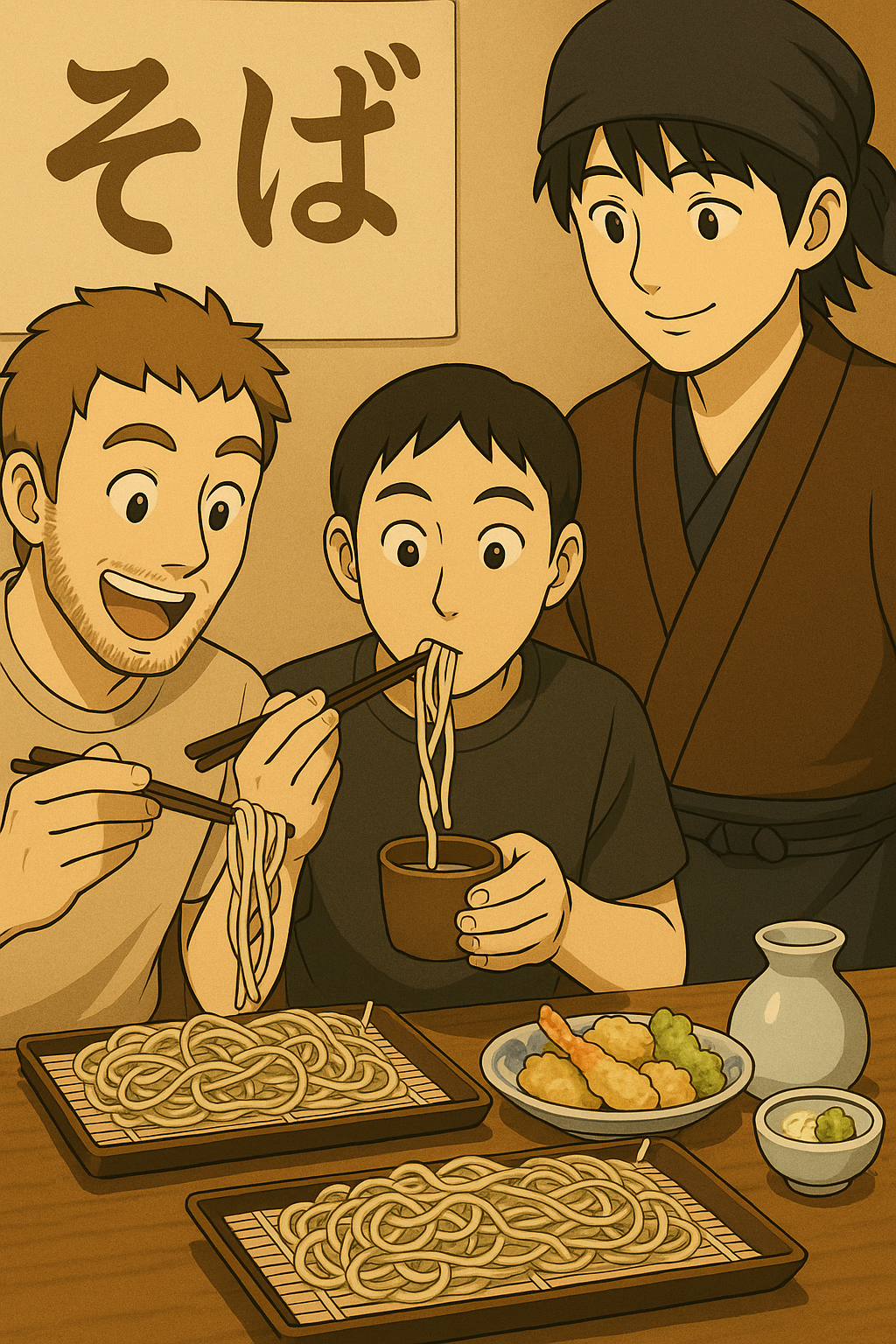
Cold soba, on the other hand, is a completely different experience. The noodles are boiled, chilled, and served on a bamboo tray with dipping sauce (called tsuyu) on the side. You dip each bite into the tsuyu before eating, letting the clean buckwheat flavor shine through. It’s light, refreshing, and ideal for summer.
💡 Tip:
If you see the word “ten-zaru soba,” it means cold soba with a side of tempura — one of the most popular combinations!
When ordering, you can simply say:
- “Kake soba onegai shimasu” (Hot soba, please)
- “Zaru soba onegai shimasu” (Cold soba, please)
And if you’re not sure, just point to the picture on the menu — most soba shops in Japan display food photos or plastic models.
🍶 Step 2: Understanding the Taste — The Beauty of Simplicity

Unlike ramen, which is famous for its heavy tonkotsu or miso-based broth, soba is known for its simplicity. The flavor comes mainly from the buckwheat and the dashi — a light broth made from dried bonito flakes (katsuobushi) and kelp (kombu).
This simplicity is what makes soba so special. You don’t need many toppings — just a bit of sliced green onion, wasabi, or grated daikon radish. The true beauty lies in how you taste the natural flavor of the ingredients.
Cold soba (zaru soba) has a delicate aroma and slightly nutty flavor, while hot soba gives comfort through its gentle warmth and mild umami taste. It’s the kind of meal that makes you pause, breathe, and enjoy the moment — much like a form of everyday Zen practice.
💡 Tip:
Don’t be shy about slurping your soba! In Japan, slurping isn’t rude — it’s actually a way to enhance the flavor and show that you’re enjoying the meal.
🫖 Step 3: The Secret Finale — Soba-yu

When you finish your soba, don’t rush to leave! Especially, you had Zaru Soba. The meal isn’t over yet. After enjoying the noodles, the restaurant will often bring you a pot of soba-yu (そば湯) — the hot water used to boil the soba.
It might seem strange at first, but soba-yu is an essential part of the experience. It’s full of nutrients from the buckwheat and has a pleasant, slightly cloudy appearance. Traditionally, you pour it into your leftover dipping sauce (tsuyu), mix it, and drink it like a light soup.
This final sip ties the whole meal together — it’s warm, gentle, and nourishing. Locals believe soba-yu helps with digestion and symbolizes gratitude for the meal.
💡 Tip:
Try adjusting the ratio of soba-yu to tsuyu to find your favorite flavor balance — just like Japanese people do!
🌾 Step 4: The Cultural Meaning Behind Soba
Soba isn’t just food — it’s a cultural symbol deeply woven into Japanese life. One of the most famous traditions is Toshikoshi Soba (年越しそば), eaten on New Year’s Eve. The long, thin noodles represent a wish for longevity and a clean break from the hardships of the past year.
Soba also connects with regional pride. For example, Nagano (known as “Shinshu”) is famous for its high-quality buckwheat, while Tokyo-style soba features a stronger, darker soy sauce flavor. Traveling across Japan, you’ll discover that each area has its own version, reflecting local tastes and climate.
💡 Tip:
When visiting a new region, always try their local soba — it’s one of the best ways to taste the soul of that area.
🗾 Step 5: How to Truly Enjoy Soba the Japanese Way
- Observe the atmosphere — many soba restaurants have a calm, minimalist vibe. Take a moment to appreciate it before eating.
- Smell the aroma — bring the noodles close and take a light breath before your first bite.
- Dip lightly — don’t soak the noodles too long in the tsuyu; just a quick dip is perfect.
- Savor the simplicity — focus on texture and flavor, not just fullness.
- End with soba-yu — never skip this step. It completes the experience.
Eating soba is not only about taste, but also about mindset. It’s an invitation to slow down and connect with Japan’s philosophy of “wabi-sabi” — finding beauty in simplicity and imperfection.
✨ Summary: Why Soba Should Be on Your Japan Bucket List
If ramen is Japan’s energy, soba is Japan’s calm.
It’s healthy, affordable, and deeply cultural — a dish that captures the Japanese spirit in every bite. Whether you’re sitting in a tiny soba shop in Tokyo or a mountain village in Nagano, the experience is always personal and grounding.
So next time you visit Japan, don’t just follow the crowds to the nearest ramen spot.
Take a quiet detour, sit at a wooden counter, and order a plate of soba.
Listen to the sound of the slurping, feel the warmth of the soba-yu, and let yourself taste Japan — one noodle at a time.


Leave a Reply