
Introduction
If ramen represents Japan’s energy and soba its simplicity, then kaiseki is Japan’s soul — a perfect balance of flavor, beauty, and mindfulness.
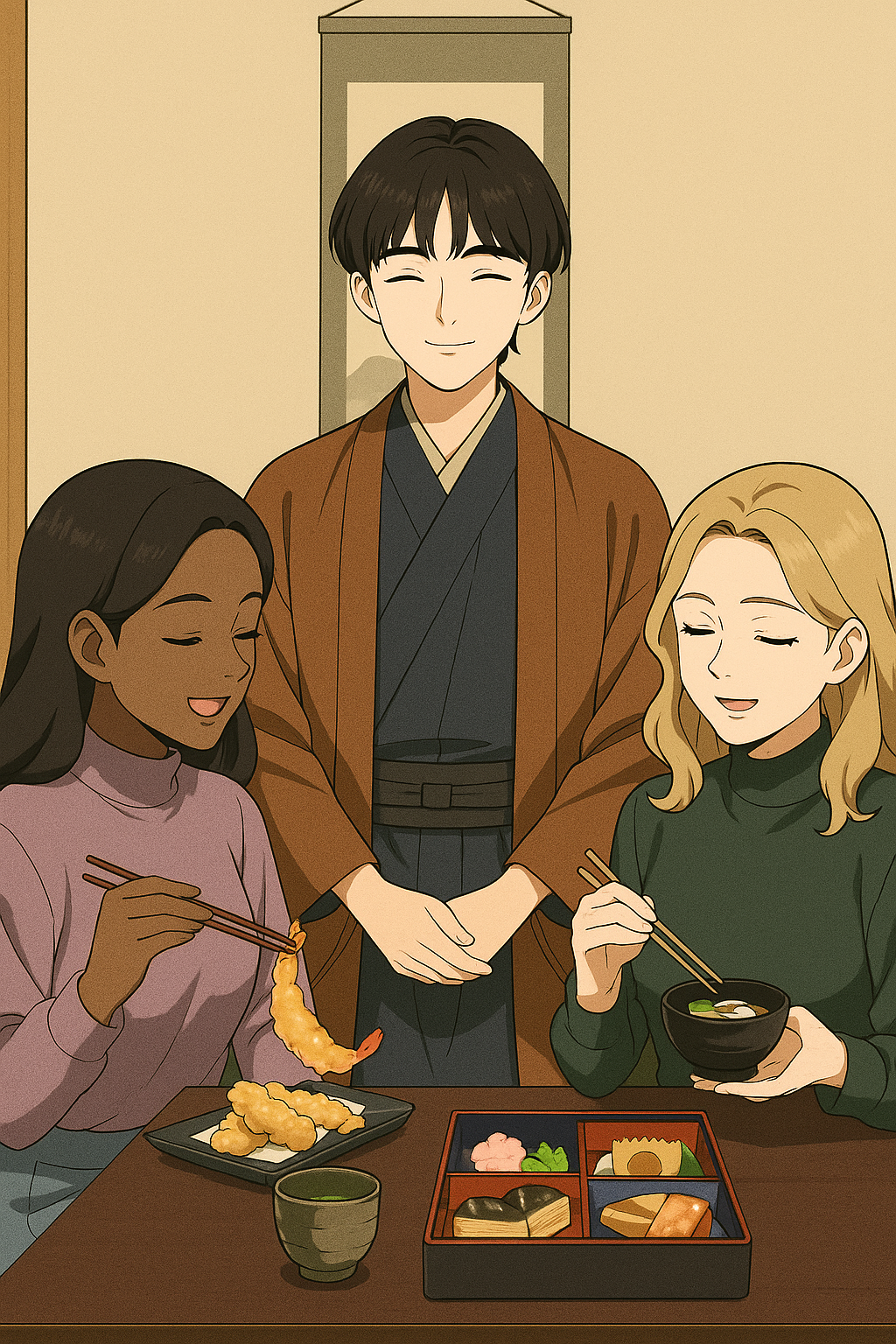
When you stay at a ryokan (traditional Japanese inn), you’ll often experience a beautifully arranged dinner served course by course. This meal is called kaiseki ryori (懐石料理) — Japan’s most refined form of dining.
Each dish is crafted to reflect the season, local ingredients, and artistic presentation. Kaiseki is not just food; it’s a story told through taste, texture, and time.
In this guide, we’ll explore what makes kaiseki so special, how it’s structured, and why it’s considered the pinnacle of Japanese cuisine.

🏮 The Cultural Essence of Kaiseki

The roots of kaiseki go back to Zen Buddhist tea ceremonies during the 16th century. At that time, guests were served a small, modest meal before drinking matcha tea. The meal’s purpose was not indulgence — it was to warm the body and prepare the spirit for tea, conversation, and reflection.
Over the centuries, this humble concept evolved into a sophisticated dining tradition that combines art, philosophy, and hospitality — the Japanese concept of omotenashi (おもてなし).
Today, kaiseki is often enjoyed in high-end restaurants and ryokans, especially in Kyoto — the spiritual home of Japanese aesthetics.
💡 Tip:
When you stay at a ryokan, the dinner often is a kaiseki-style course meal. Don’t rush through it — it’s meant to be savored slowly, like a journey through Japan’s seasons.
🍶 The Spirit of Kaiseki: Balance, Beauty, and Seasonality
Every detail in kaiseki has meaning. The dishes are designed to express “shun” (旬) — the concept of seasonality. Only ingredients that are in their absolute peak are used, whether it’s the first bamboo shoots of spring, sweetfish in summer, or chestnuts in autumn.
The balance extends beyond flavor:
- Taste: A mix of sweet, salty, sour, bitter, and umami.
- Texture: From crisp vegetables to soft tofu and tender fish.
- Color: Each plate is a piece of art — with greens, yellows, reds, and whites creating harmony.
- Presentation: Plates, bowls, and trays are carefully chosen to match the season.
Unlike Western fine dining, which often builds richness, kaiseki aims for delicate layers of simplicity. Each dish allows you to taste the pure flavor of its ingredients.
💡 Tip:
Kaiseki isn’t about being full — it’s about being fulfilled. It teaches you to find satisfaction in subtlety, not abundance.
🍵 The Course Order – A Journey of Flavor
While menus may vary by region and chef, a traditional kaiseki meal usually follows a harmonious sequence. Each dish flows into the next, balancing temperature, flavor, and color.
Here’s a classic order you might experience at a ryokan or restaurant:
1️⃣ Sakizuke (先附) – Appetizer

Similar to an amuse-bouche, this small dish sets the tone for the meal. It’s often a light bite using seasonal ingredients, beautifully plated to awaken your senses.
Example: sesame tofu with wasabi, or marinated vegetables with yuzu.
2️⃣ Hassun (八寸) – Seasonal Platter

This dish reflects the current season and connects the diner with nature. It may include small bites like grilled fish, mountain vegetables, or a decorative leaf that represents the month.
Example: autumn kaiseki might feature roasted ginkgo nuts or chestnuts.
3️⃣ Mukozuke (向付) – Sashimi

Fresh, high-quality slices of raw fish arranged like art. The color and cut are chosen carefully to express balance.
Example: tuna, flounder, or seasonal white fish with freshly grated wasabi.
💡 Tip:
Unlike sushi, kaiseki sashimi is eaten without soy sauce soaking. Lightly touch the fish to the sauce — the goal is to taste its natural sweetness.
4️⃣ Takiawase (炊合せ) – Simmered Dish

A gentle combination of vegetables and protein simmered in a light broth. This dish shows the chef’s mastery of umami and texture.
Example: simmered taro, pumpkin, and tofu with a touch of dashi.
5️⃣ Futamono (蓋物) – Lidded Dish

Usually a warm soup like Osuimono or steamed item served with a lid to preserve aroma and temperature. The moment you open it, a wave of fragrance greets you.
Example: clear soup with seasonal fish and mitsuba herb.
6️⃣ Yakimono (焼物) – Grilled Dish or Agemono (揚げ物)– Fried Dish

This course highlights the main protein — often fish or meat — seasoned simply and grilled perfectly.
Example: grilled sea bream with yuzu or miso-marinated black cod.
7️⃣ Suimono or Naka-choko (酢の物/中猪口) – Palate Cleanser
A refreshing, slightly acidic dish designed to reset your taste buds before the next course.
Example: vinegar-marinated cucumber or seaweed salad.
8️⃣ Shokuji (食事) – Rice, Soup, and Pickles

The meal returns to simplicity — freshly cooked rice, miso soup, and seasonal pickles. It’s the humble heart of Japanese cuisine.
💡 Tip:
The rice is never just “a side dish.” It’s symbolic of gratitude — the foundation of every Japanese meal.
9️⃣ Mizumono (水物) – Dessert

A light, refreshing finish — usually seasonal fruit, jelly, or a small wagashi sweet. Kaiseki never ends with something overly sweet; the goal is to leave your palate refreshed and calm.
🍂 The Beauty in Subtlety
Kaiseki isn’t only about flavor — it’s an experience that engages all five senses. The silence between courses, the warmth of the pottery, and the arrangement of flowers on the tray all create a dialogue between nature and the diner.
Even the serving pace matters. In kaiseki, time is an ingredient. Each dish is served at the perfect moment, letting you enjoy the flow of the meal like a quiet rhythm.
This is why a kaiseki dinner can take over two hours — not because of its size, but because it invites you to slow down and truly be present.
💡 Tip:
In Japan, kaiseki is often enjoyed during special occasions — anniversaries, tea ceremonies, or when entertaining guests. It’s a way to express respect and connection through food.
🏔 Where to Experience Kaiseki
If you want to try authentic kaiseki in Japan, consider staying at a ryokan with dinner included.
Many traditional inns in Kyoto, Kanazawa, or Hakone feature multi-course meals prepared by skilled chefs who use local and seasonal ingredients.
Alternatively, you can experience kaiseki at restaurants such as kyoto and Kamakura, where the tradition meets innovation.
For travelers, a ryokan kaiseki dinner is often more intimate and memorable — you can enjoy it while wearing a yukata, sitting by tatami, surrounded by quiet nature.
🌸 Summary: Why Kaiseki Is Japan’s Ultimate Dining Experience

Kaiseki is more than a meal — it’s an edible poem that captures Japan’s philosophy of beauty, balance, and respect for nature.
From the first bite of sashimi to the final sip of miso soup, every moment tells a story.
It’s a journey that teaches us how to slow down, appreciate details, and find meaning in simplicity — the very essence of Japanese culture.
So next time you stay at a ryokan, don’t think of kaiseki as just “dinner.”
It’s an invitation — to see, taste, and feel Japan through every delicate dish.
💬 Tip to End:
“Kaiseki isn’t about luxury — it’s about harmony. Every bite is a quiet conversation with the season.”

Leave a Reply