
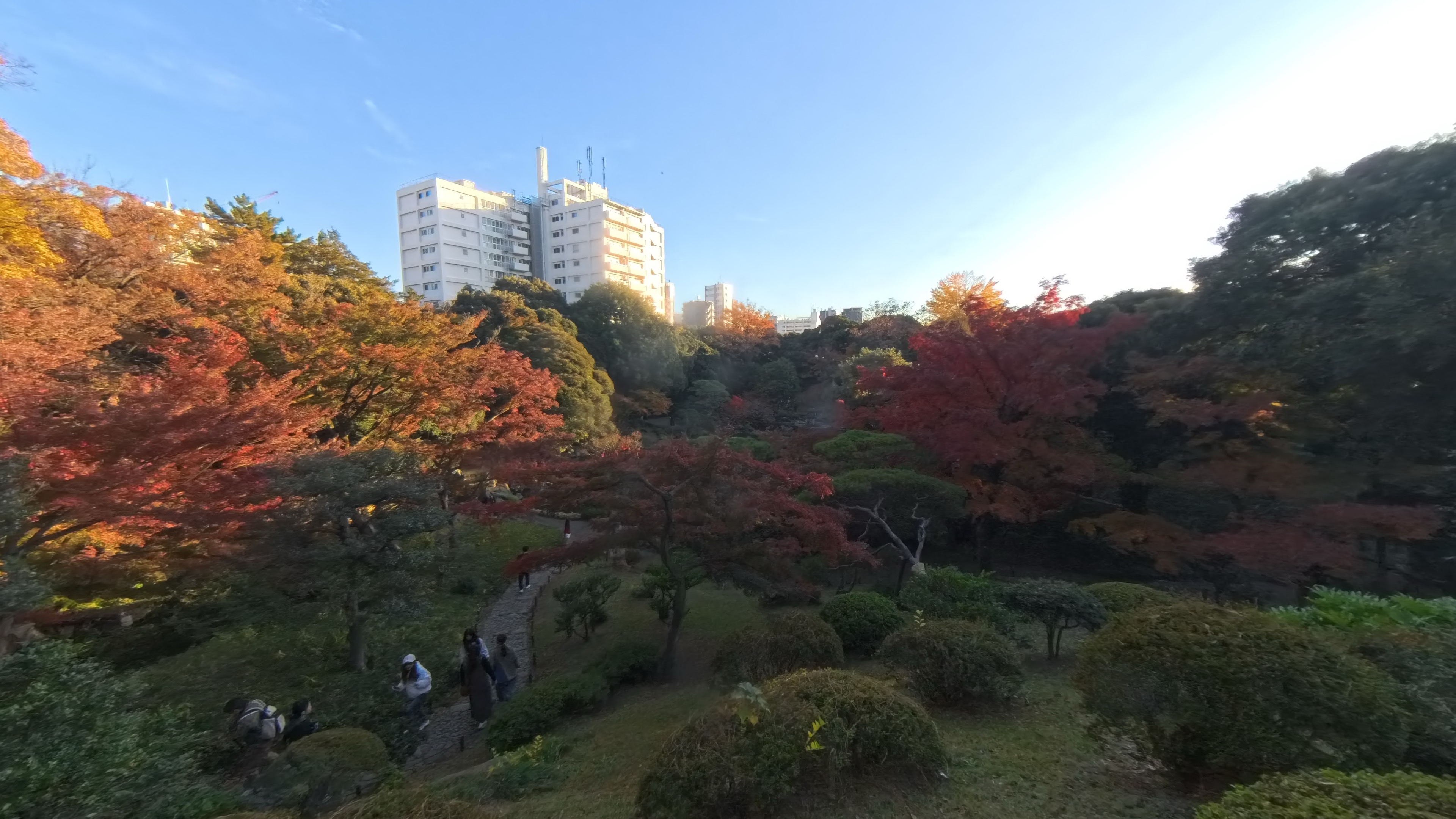
If you think Tokyo is all neon lights and skyscrapers, you may want to think again. Nestled in the quiet residential area of Kita-ku in northern Tokyo lies Kyu-Furukawa Gardens — a rare blend of European elegance and traditional Japanese serenity. This 30,780 m² estate features a Western-style mansion on a sloped hill, a terraced rose garden, and a beautiful Japanese strolling garden below.
Opened to the public in 1956, the garden was originally built as the private residence of the Furukawa family during the Taishō period.
For travelers looking for a peaceful escape from the typical busy Tokyo, and for those yearning to see a truly unique East-meets-West fusion — especially during autumn — Kyu-Furukawa offers a magical experience.
🏡 History & Layout: Western Mansion Meets Japanese Garden

The mansion at the top of the slope was designed by the British architect Josiah Conder, often called the “father of modern Japanese architecture.” He completed the Western-style residence by 1917.
What makes Kyu-Furukawa truly special is that just below the Western mansion and rose terraces lies a traditional Japanese garden crafted by renowned Kyoto gardener Ogawa Jihei VII. The Japanese garden was completed around 1919.
This hybrid layout — Western mansion and garden on the slope, Japanese landscape garden below — is rare in Tokyo. As you descend from the brick-and-slate building past the geometric rose garden, you gradually enter a serene, forest-surrounded tranquility: a Shinji-ike pond shaped like the kanji for “heart” (心), stone lanterns, a dramatic 10-meter waterfall, a dry waterfall made of stones (karetaki), and paths that wind through forested areas.
The contrast between the refined Western garden and the organic, flowing Japanese landscape is what gives Kyu-Furukawa its distinct charm — and a sense of time-travel between two aesthetics.
🌹 Seasonal Highlights — Why Autumn & Roses Are a Perfect Match

One of the standout features of Kyu-Furukawa is its rose garden. On the slope in front of the mansion, more than 90 species (some sources say up to 100) of roses bloom, creating a Western–style terrace garden that feels like a little Europe in Tokyo.
Roses bloom mainly twice a year: in spring (mid-May to mid-June) and autumn (mid-October to late November).
But it’s in late November through early December when something magical happens: the garden’s Japanese section bursts into autumn colors. Maples, Japanese wax trees, and other deciduous plants around the pond and walking paths turn vivid red, orange, and gold — the classic hues of Japanese koyo (autumn foliage).
During this period, you can enjoy a rare seasonal spectacle: roses in bloom and Japanese autumn leaves together. The Western rose garden drenched in rose colors, while the Japanese garden below glows with fall foliage — a harmonious fusion of East and West, nature and architecture. This unique blend is exactly what makes Kyu-Furukawa a top fall destination in Tokyo.
🎯 Why It’s Great for Foreign Visitors & Off-The-Beaten-Path Travel

- Easy access from central Tokyo: Just a ~7-minute walk from either Kami-Nakazato Station (JR Keihin-Tohoku Line) or Nishigahara Station (Tokyo Metro Namboku Line).
- Affordable entrance fee: Only ¥150 for adults (free for children/eligible youth), making it budget friendly.
- Less crowded than major tourist spots: Because it’s tucked away in a residential area and relatively small compared to vast public parks, it tends to stay calm — perfect for relaxed strolls and photography.
- Dual aesthetic experience: Experience European-style architecture and roses and traditional Japanese garden design in a single visit. That contrast often surprises and delights visitors unfamiliar with Japan’s layered history and design sensibilities.
- Seasonal variety: Whether it’s roses in spring, hydrangeas in early summer, or autumn foliage and roses in fall — every season offers different, Instagram-worthy visuals.
Given your target audience — young foreigners traveling to Japan, looking for hidden gems beyond overtourism — Kyu-Furukawa fits perfectly. It’s relatively unknown outside local circles compared to famous spots, affordable, easy to reach, and unforgettable.
📸 What to See & How to Enjoy — A Walk Through the Garden

Here’s a recommended route and what to focus on when you visit, especially in autumn:
- Start at the Western mansion & terrace — Walk up to the brick-and-slate building at the top of the slope. The architecture reflects early 20th century Western taste, yet inside you’ll find a mix of Western rooms and tatami-style Japanese rooms upstairs.
- Descend into the rose garden — The terraced rose beds slope down from the mansion, creating a cascade of colors and scents. In autumn, roses and falling leaves often combine for a romantic scene. Don’t forget to walk along the gravel paths and snap photos with the mansion as a backdrop.
- Enter the Japanese garden — Continue downward to the garden’s lower section. The highlight is the Shinji-ike pond shaped like the kanji “heart.” Around it, explore the stone lanterns, the 10-meter waterfall, dry waterfall (karetaki), small hills and forested slopes — all creating a calming, picturesque environment.
- Autumn foliage & seasonal atmosphere — In late November to early December, look out for colorful maples and deciduous trees — the red and orange leaves around the pond and paths make for an authentic Japanese autumn vibe. Combined with lingering roses near the slope, it’s a fusion of two worlds.
- Relax & reflect — Benches, peaceful corners, shaded paths — perfect for sitting down with a camera or a sketchbook, or simply enjoying the quiet contrast to central Tokyo’s bustle.
If you visit on a weekday or outside peak hours, you’re likely to have large parts virtually to yourself — ideal for content creation (photos, reels) or just a moment of calm.
🧭 Practical Info: What You Should Know
| Information | Details |
|---|---|
| 📍 Address | 1-27-39 Nishigahara, Kita-ku, Tokyo 114-0024 東京の公園+1 |
| ⏰ Opening Hours | 9:00 – 17:00 (last entry 16:30) 東京の公園+1 |
| 🏷️ Admission Fee | Adults ¥150 — free for children, lower fee for seniors 東京の公園+1 |
| 🚆 Access | ~7 min walk from Kami-Nakazato Station (JR Keihin-Tohoku Line) or Nishigahara Station (Tokyo Metro Namboku Line) Japan Travel+1 |
| 📅 Best Visiting Season | • Autumn foliage + Roses: mid-October to early December • Spring Roses & Flowers: mid-May to June Real Japanese Gardens+2tokyo-garden.net+2 |
🍂 Why Kyu-Furukawa Gardens Is a Must-Visit This Autumn
Tokyo has many famous spots — but what makes Kyu-Furukawa stand out is its subtle charm: it doesn’t scream with crowds or flashy attractions. Instead, it invites you quietly into a space where history, nature, and romance meet.
- It’s a hidden gem: Many travelers never hear about it. That means fewer tourists, more peacefulness, and better chances for your own “unedited” photos and memories.
- Unique East–West fusion: The architecture and garden design tell a story of Japan’s modernization period — Western influence mingling with traditional Japanese aesthetics.
- Seasonal beauty + affordability: For just 150 yen, you get a full experience of roses, autumn foliage, Japanese pond garden, architectural beauty — something which would cost far more elsewhere.
- Perfect for photos, reels, and slow travel vibes: The contrast between rose terraces, stone mansion, maple-lined pathways, and serene water features makes it ideal for content creation — especially if you aim to share the “real Japan” beyond the cliché tourist spots.
For a traveler (especially one who loves discovering hidden gems), Kyu-Furukawa feels like a secret waiting to be uncovered. It’s calm, beautiful, and effortlessly picturesque.

✨ Final Thoughts — Rediscover Tokyo’s Quiet Beauty
If you’re planning a trip to Tokyo this autumn, you don’t have to follow the usual crowd. Skip the hyper-touristic spots once in a while, and consider visiting Kyu-Furukawa Gardens instead. Whether you come for the roses, the autumn foliage, the beautiful architecture, or just some peaceful time away from the urban rush — this garden will give you a side of Tokyo few foreigners see.
Next time you scroll through neon-lit streets and busy trains, remember — just 20–30 minutes from the city center lies a quiet garden where East meets West, and where autumn whispers in maple leaves and rose petals.
Leave a Reply