
Introduction: A Quiet but Powerful Start to the Year in Japan

In Japan, the New Year is not just a countdown or a party.
It is a moment to reset, reflect, and quietly prepare for the year ahead.
One of the most important traditions during this time is Hatsumode (初詣) — the first shrine or temple visit of the year. Almost every Japanese person, regardless of religious background, participates in Hatsumode in some form. Families, couples, friends, and even solo visitors head out in winter coats, lining up patiently to offer prayers for health, happiness, and success.
For travelers visiting Japan in late December or early January, you might notice long lines at shrines, food stalls set up along the streets, and the deep, echoing sound of temple bells at midnight. While many tourists visit shrines as sightseeing spots, Hatsumode carries a very different meaning for locals.
In this article, we’ll explore what Hatsumode really is, how it differs from a regular shrine visit, where Japanese people actually go, and what travelers should know before joining the crowds.
What Is Hatsumode?
Hatsumode literally means “first visit” — specifically, the first visit to a shrine or temple in the new year.
Most people go between:
January 1st and January 3rd, with the biggest crowds on New Year’s Day Some go as early as midnight on December 31st Others wait until the first week of January to avoid crowds
Unlike visiting a shrine casually during sightseeing, Hatsumode is a symbolic act. It represents:
Gratitude for the previous year A fresh start for the new year A personal commitment to do one’s best
Even people who rarely think about religion still take Hatsumode seriously. It’s less about faith and more about mindset.
Is Visiting a Shrine for Hatsumode Different from Sightseeing?
Yes — and this is one of the most important things travelers should understand.
When tourists visit shrines during normal travel, the focus is often on:
Architecture History Photos Seasonal beauty
During Hatsumode, the atmosphere changes completely.
People are not there to explore. They are there to:
Pray quietly Reflect on their goals Ask for protection and good fortune
You’ll notice:
Long, orderly lines leading to the main hall A much calmer, more serious mood People bowing deeply and praying silently
Photography is still allowed in many areas, but this is one time when being extra respectful matters. Hatsumode is not a festival performance — it’s a personal ritual shared by millions.

Famous Shrines vs. Local Shrines: Where Do Japanese People Go?
From the outside, it might seem like everyone goes to famous places such as:
Meiji Jingu (Tokyo) Fushimi Inari Taisha (Kyoto) Senso-ji (Tokyo)
While these locations attract massive crowds, many Japanese people actually prefer local neighborhood shrines.
Why Local Shrines Are Popular
Shorter lines Familiar surroundings A stronger personal connection to the community A quieter, more reflective experience
For many families, visiting the same local shrine every year is a tradition passed down through generations.

When People Choose Famous Shrines
On the other hand, some people intentionally visit well-known shrines — especially if they have a specific goal for the year.
For example:
Love and relationships Financial success or career growth Academic success or exams
Certain shrines are famous for specific blessings, so if someone is determined to focus on one area of life, they may travel farther and wait longer to pray there.
Food Stalls and a Festive Atmosphere
Despite the calm nature of prayer itself, Hatsumode also has a warm, lively side.
Around many shrines, especially on January 1st–3rd, you’ll find food stalls (屋台) selling:
Takoyaki Yakisoba Grilled corn Sweet amazake (a traditional sweet drink)
For many people, this is part of the fun. Families walk around with warm food in hand, couples share snacks, and children enjoy the festival-like feeling.
It’s a rare moment in winter where cold streets feel welcoming and alive.
Joya no Kane: The Bell That Welcomes the New Year

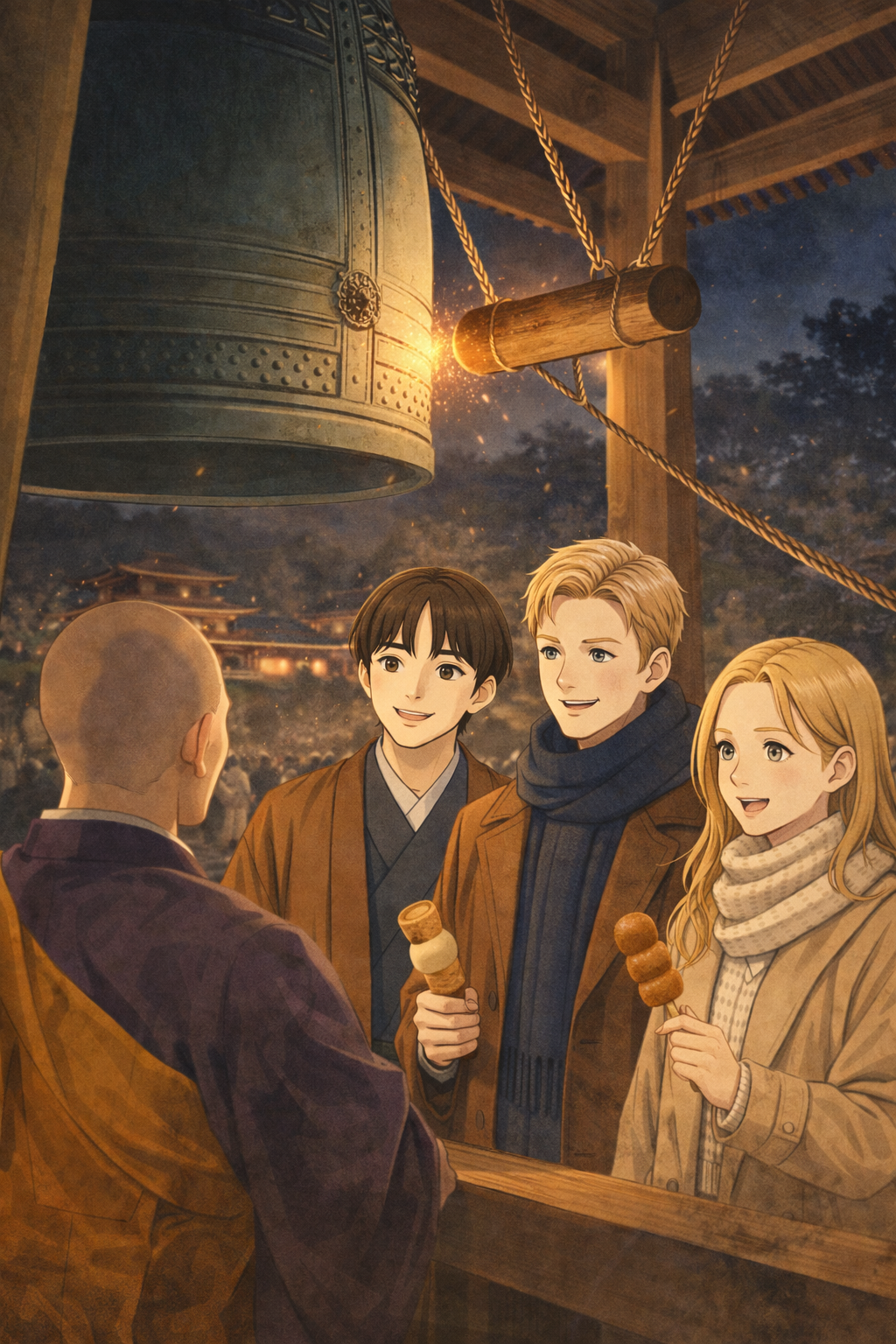
One of the most symbolic sounds of New Year’s Eve in Japan is Joya no Kane (除夜の鐘).
At Buddhist temples, bells are rung 108 times just before and after midnight. Each ring is said to cleanse one of the 108 earthly desires that cause human suffering, according to Buddhist belief.
Even if you’re not religious, hearing the bell is deeply moving. The sound is slow, heavy, and echoes through the cold night air. Many people say it helps them mentally leave the past year behind.
Some temples allow visitors to ring the bell themselves, while others only allow monks to do so.
Omikuji: Fortune-Telling for the Year Ahead

Another popular part of Hatsumode is drawing an Omikuji (おみくじ) — a paper fortune that predicts your luck for the year.
Omikuji usually include:
Overall luck Love Work and studies Health
The results range from Great Blessing to Bad Luck.
If you draw a bad fortune, don’t worry. It’s common to:
Tie the paper to a tree or designated rack Leave the bad luck behind at the shrine
Many travelers enjoy Omikuji because they’re easy to understand and often available in English at major shrines.
Practical Tips: What Travelers Should Know
Here’s the honest truth.
Hatsumode is extremely crowded.
Even small local shrines can have long lines, and major shrines can require hours of waiting.
Important Tips
If you really want to experience Hatsumode, go early in the morning or later in the evening Dress warmly — you will stand still for a long time Be patient and respectful If you just want to visit a shrine for sightseeing, consider going after January 7th
For travelers, Hatsumode is meaningful only if you want to experience the cultural mindset behind it. Otherwise, visiting later will be far more comfortable.
Should Travelers Join Hatsumode?
If you:
Want to understand Japanese culture deeply Don’t mind crowds Are curious about local traditions
Then yes — Hatsumode can be a beautiful experience.
If you:
Prefer quiet sightseeing Want to take photos freely Have limited time
Then it’s perfectly okay to skip it and visit shrines later in January.
There is no “right” answer — just choose what fits your travel style.
Conclusion: A New Year, a Quiet Promise
Hatsumode is not about religion in a strict sense.
It’s about making a quiet promise to yourself.
Standing in line, offering a prayer, drawing a fortune — these small actions help people mentally reset and step into the new year with intention.
For visitors, witnessing this tradition offers a rare glimpse into the emotional side of Japanese culture — one that values reflection, patience, and hope.
Whether you participate or simply observe, Hatsumode is a reminder that sometimes, starting the year slowly is the most powerful way to begin.

Leave a Reply