
Why January in Japan Feels Different
If you visit Japan in January, you may sense something unusual.
The streets feel calmer than expected.
People walk a little slower, speak more quietly, and often stay close to one another.
You might think this feeling comes from winter weather.
You may also wonder if January is simply not a good season to travel.
Those thoughts are natural, especially if this is your first trip to Japan.
Many travelers imagine January as a time for packed schedules.
They expect temples, shopping streets, and famous landmarks to feel lively.
In Japan, however, January carries a different role.
This quiet atmosphere is deeply connected to culture.
January is seen as a month that focuses on people rather than places.
Understanding this perspective can change how you see your journey.
This idea has a specific name in Japanese culture.
It is called Mutsuki.
What Does “Mutsuki” Mean?

January in Japan has another name besides “January.”
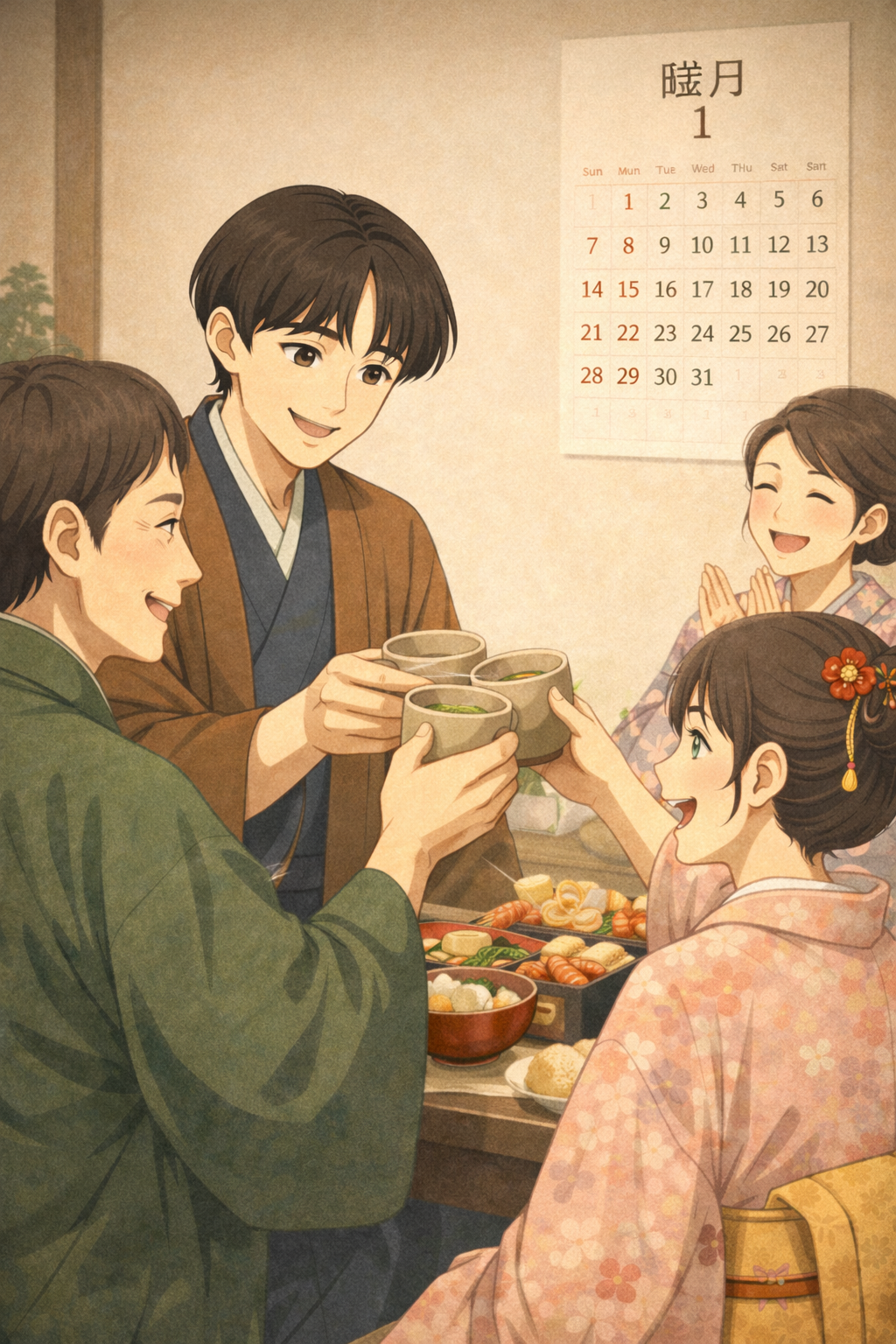
It is called Mutsuki, written as 睦月.
The key character is 睦.
This character expresses closeness, harmony, and friendly relationships.
In simple terms, it describes people getting along and feeling connected.
Mutsuki is not a modern invention.
It comes from the traditional Japanese calendar system.
Before the Western calendar was adopted, each month had a poetic name.
One common explanation is easy to picture.
January is the time when families gather for New Year.
People return home after long periods apart because of work or school.
They sit at the same table, share meals, and talk about the year ahead.
That sense of reunion lies at the heart of Mutsuki.
The month is closely tied to human connection.
When you hear the word Mutsuki, think beyond a date on a calendar.
Think about warmth, shared time, and emotional closeness.
Historical Background: How January Became a Month of Connection

To understand Mutsuki, it helps to look at history.
In traditional Japan, winter limited movement and outdoor activity.
Travel was difficult, and daily life slowed naturally.
January marked a clear turning point.
A new year meant resetting intentions and hopes.
It was also a chance to reconnect with family and neighbors.
New Year celebrations were central to everyday life.
Homes were cleaned carefully, meals were prepared together, and visits were planned.
These customs strengthened bonds within families and communities.
Over time, January became associated with togetherness.
It was not about speed or excitement.
Instead, it emphasized reflection and shared presence.
This mindset still exists today.
Even in large cities, you can feel it if you observe quietly.
Japan in January encourages you to slow down and notice people.
How Japanese People Actually Spend January

January in Japan is filled with meaningful moments.
It may look quiet on the surface, but it is not empty.
The focus simply shifts from events to relationships.
The month begins with New Year, known as Shogatsu.
Families gather at home to share meals and time together.
This period is one of the most important in the Japanese year.
Another major event is Coming-of-Age Day.
Young adults celebrate reaching adulthood at the age of twenty.
Many return to their hometowns for the ceremony.
You may see them wearing formal clothing and smiling beside their families.
Friends who have not met for years often reunite on this day.
It is a modern expression of Mutsuki in everyday life.
January also moves at a slower pace overall.
People prioritize rest, reflection, and connection.
This rhythm creates the gentle atmosphere many travelers notice.
How Travelers Can Experience “Mutsuki”

You do not need deep knowledge to experience Mutsuki.
A small change in how you travel is often enough.
Instead of rushing from place to place, pause more often.
Sit in a quiet café and watch daily life unfold.
Notice how families and friends spend time together.
Visiting a shrine in January can also feel meaningful.
Try going early in the morning when it is calm.
You may sense a shared mood of reflection and hope.
Food is another gateway to connection.
Seasonal meals are meant to be enjoyed slowly.
Who you eat with often matters more than what you eat.
When you travel with this mindset, Japan feels different.
It becomes less like a checklist and more like a shared moment.
That feeling reflects the essence of Mutsuki.
Is January a Good Time to Visit Japan?
January is not the right season for everyone, and that is fine.
Some shops close briefly after New Year.
Days are shorter, and temperatures are lower.
There are also clear benefits.
Popular areas tend to be less crowded.
Cultural details are easier to notice in a calmer setting.
If you enjoy quiet travel, January can suit you well.
If you want to understand people rather than rush sightseeing, it can be ideal.
Mutsuki offers depth rather than spectacle.
Knowing this helps you make an informed choice.
You can travel with realistic expectations.
That clarity alone reduces confusion and stress.
Final Thoughts: How to Use “Mutsuki” in Your Trip

Mutsuki is not a word you need to memorize.
It is a concept you can feel through experience.
When you visit Japan in January, allow yourself to slow down.
Pay attention to moments of togetherness around you.
Choose connection over speed whenever possible.
By doing so, your trip can become more meaningful.
Not louder, but richer.
That quiet richness is the beauty of Mutsuki.


Leave a Reply