
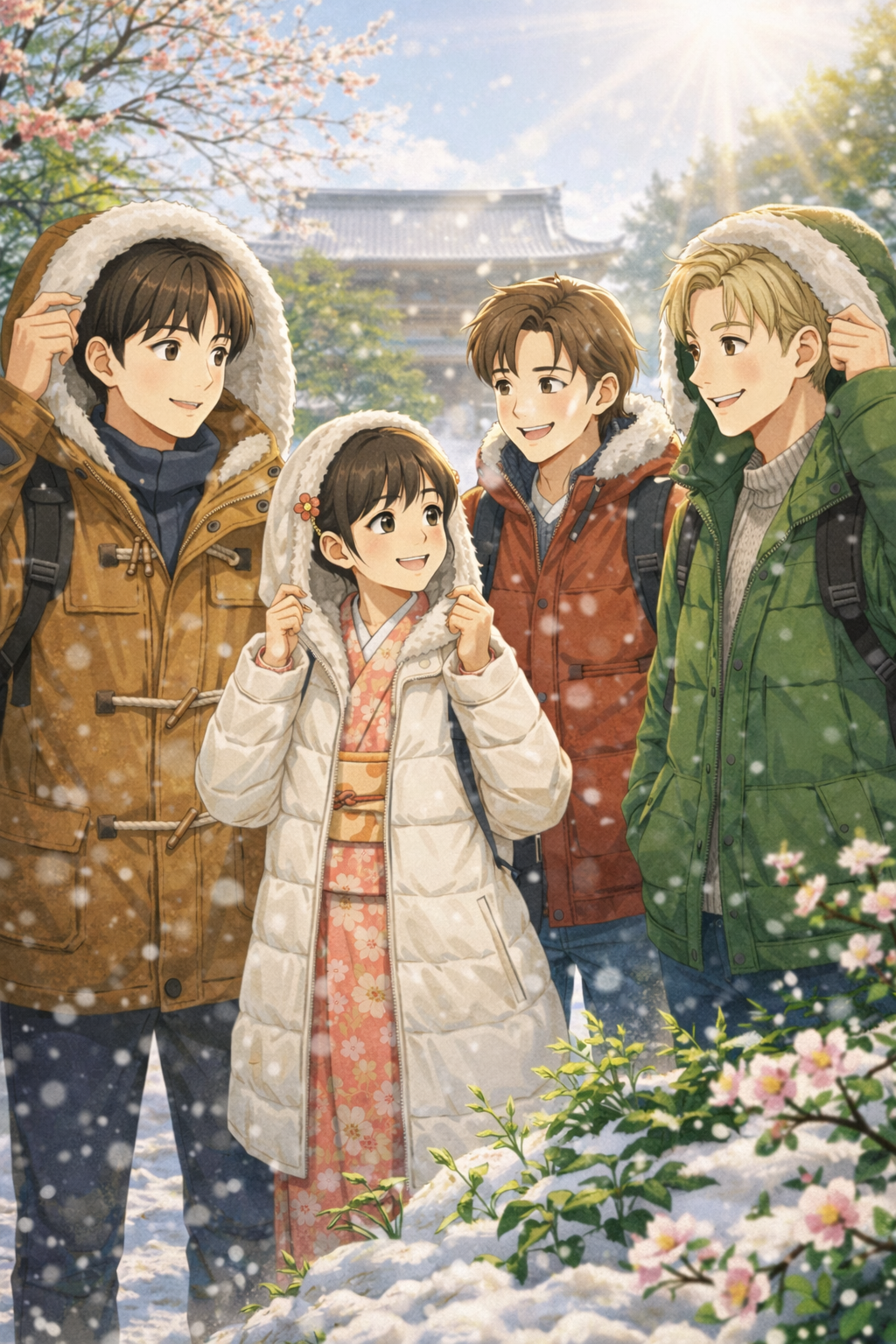
Why Kisaragi Feels Confusing at First
If you have been studying Japanese culture for a while, February may feel strangely difficult to understand. People say that spring is approaching, yet the air is sharp, mornings are freezing, and you still reach for your coat without thinking. You might wonder why this period is sometimes described with hopeful words when your body clearly feels winter. That confusion is completely natural, and many people feel the same way at first.
Part of the reason is that Kisaragi, the old Japanese name for February, does not describe a finished season. It describes a moment of transition. You are not expected to suddenly feel warm or cheerful. Instead, you are invited to notice very small changes while accepting that the cold is still real. Once you understand this, February stops feeling like an “in-between month” with no character, and starts to feel like a quiet but meaningful turning point.
In this article, you will learn how Japanese people have understood Kisaragi, what they paid attention to, and how you can experience this season yourself without forcing a romantic image of spring. By the end, you should feel less confused and more confident about what this month represents, and you will have one simple action you can try today or this week.
The Meaning of Kisaragi: Why February Has This Name
Kisaragi is the traditional name for the second month in the old Japanese calendar. Unlike modern month names, which are just numbers, these older names tried to capture how people felt about the season. There are several explanations for the word Kisaragi, but they all point in a similar direction.
One well-known idea is that Kisaragi comes from words meaning “to put on more clothes.” Even though spring is technically getting closer, people still need extra layers because the cold has not gone away. Another explanation suggests a meaning closer to “the return of energy,” referring to the first signs that nature is slowly waking up again. These explanations do not contradict each other. Together, they show a season where hope and discomfort exist at the same time.
It is also important to remember that the old calendar did not match our modern one exactly. Old February usually covered a period that would feel closer to late February or early March today. That means Kisaragi was never meant to describe deep winter alone, but rather the stage when winter begins to loosen its grip. Understanding this helps you stop expecting obvious signs of spring and instead look for subtle ones.

Spring Is Coming, But It’s Still Cold — Why You Still Wear a Coat
One of the most helpful ways to understand Kisaragi is to accept a simple truth: spring may be coming, but you are still cold, and that is not a mistake. In Japanese seasonal thinking, feeling cold does not mean you are “late” or missing something. It means you are paying attention to reality.
During Kisaragi, sunlight often feels brighter, and days can seem slightly longer, yet the wind remains sharp and the ground holds winter’s chill. Japanese culture does not ask you to pretend otherwise. Instead, it encourages you to prepare carefully. Wearing a coat during this time is not a failure to sense spring. It is part of respecting the season as it is.
This attitude also appears in daily life. People may start choosing lighter colors or slightly different fabrics, but they do not suddenly dress as if it were April. The idea is to move gradually, matching your body to the environment rather than rushing ahead. When you think of Kisaragi this way, the contrast between “spring” and “cold” stops being confusing and starts to feel balanced.
Finding Spring in Small Details: Plum Blossoms and New Green

If you look for big changes in Kisaragi, you may miss the season entirely. This month teaches you to notice small details. One of the most important symbols of this time is the plum blossom. Unlike cherry blossoms, which bloom all at once and create dramatic scenes, plum blossoms appear quietly and early, often while snow or frost is still possible.
Plum trees do not announce spring loudly. Their buds swell slowly, their flowers are modest in size, and their fragrance is often noticed before their color. This makes them perfect for Kisaragi. They do not tell you that winter is over. They tell you that something has begun.
When you stand near a plum tree during this time, you may notice bare branches mixed with a few blossoms and hints of green. That mixture is the message of Kisaragi itself. Spring is not a clear line you cross. It is a gradual process you witness. Even noticing new grass at the edge of a path or subtle color returning to leaves can be enough to understand the season more deeply.
Enjoying Seasonal Change Since the Heian Period

This way of appreciating small changes is not new. As far back as the Heian period, people in Japan paid close attention to moments like Kisaragi. They did not wait for full bloom or obvious warmth. Instead, they valued the first signs, the hints that required patience to notice.
Writings from that time often describe nature in delicate terms, focusing on beginnings rather than conclusions. A single bud, a change in light, or a slight shift in the air could be worthy of reflection. Temples and gardens were especially important places for this kind of observation, because they created calm spaces where people could sit, wait, and notice without rushing.
When you visit a temple or garden today during February, you are stepping into a tradition that values quiet awareness. You are not expected to be impressed by something grand. You are invited to feel the season slowly, even if nothing dramatic seems to be happening. This mindset helps modern readers understand that Kisaragi is not empty or dull. It is intentionally gentle.
February Traditions: Setsubun and Ehomaki Explained Simply

February is also marked by important traditions that reflect this idea of transition. Setsubun, often translated as a seasonal dividing day, represents the moment just before spring officially begins. Rather than celebrating spring itself, it focuses on clearing away what does not belong in the new season.
The custom of throwing beans while calling out phrases about fortune and misfortune is symbolic, not aggressive. The “oni,” or demons, represent things like bad luck, stagnation, or unease. By performing this ritual, people express a desire to reset emotionally and mentally before moving forward. It is a simple action with a clear meaning, which makes it easy to understand and practice.
Ehomaki, a special sushi roll eaten around the same time, carries a similar feeling. You quietly face a lucky direction and eat without speaking, not to make a wish in a magical sense, but to mark a personal pause. It is a moment to reflect, even briefly, on the year ahead. These traditions fit perfectly into Kisaragi, because they do not rush you into spring. They prepare you for it.

Final Thought|How to Experience Kisaragi This Month (Very Practical)
If you are wondering what you should actually do after reading all this, the answer is simple. This month, choose one quiet moment to step outside with your coat still on, find a plum tree or early sign of green, and spend a few minutes just noticing it. You do not need to take photos or make it special. Just let yourself feel that mix of cold air and returning light. That single experience is enough to understand Kisaragi more deeply than any explanation.


Leave a Reply