
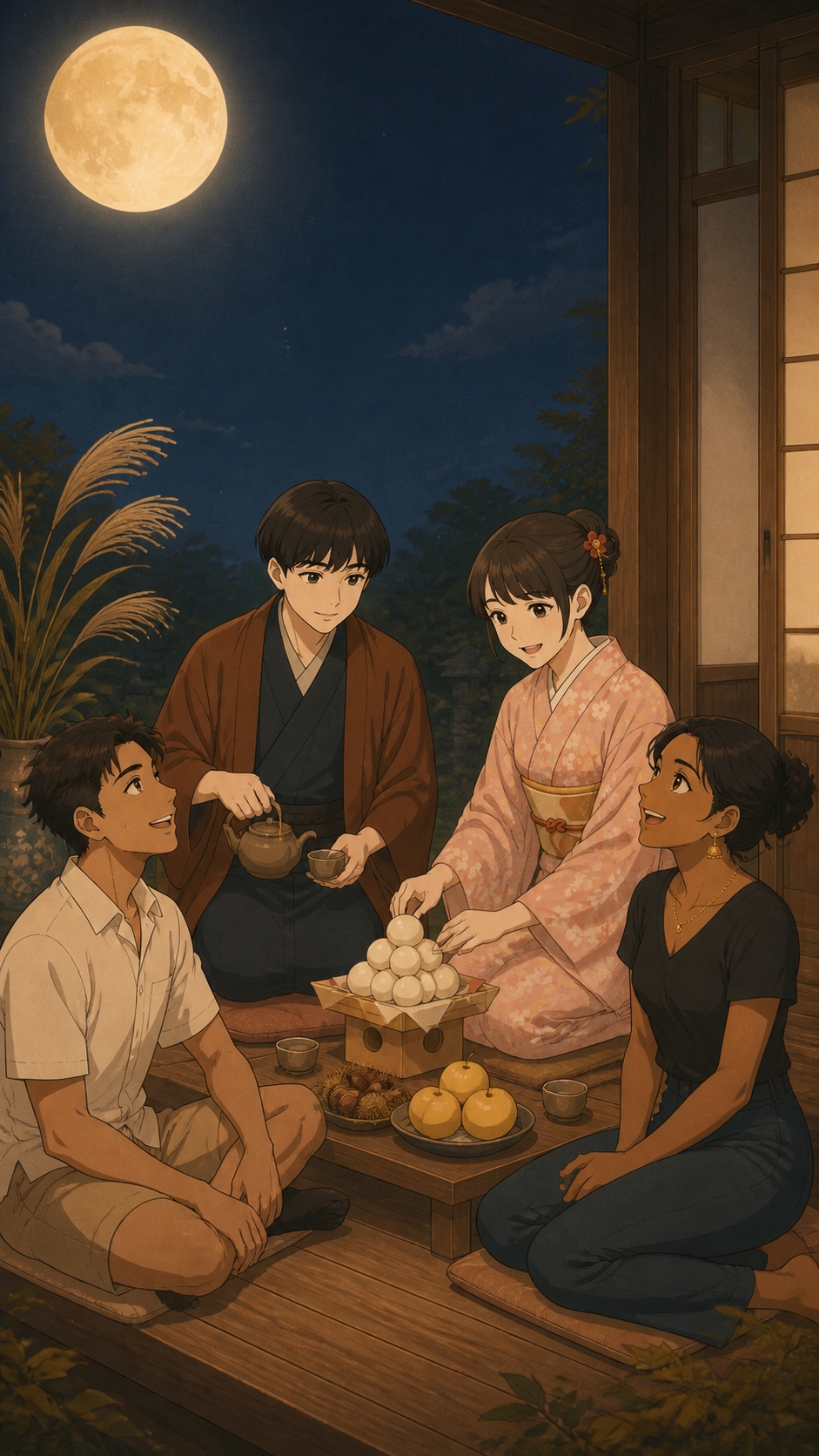
September in Japan sits between two seasons. The traditional name Nagatsuki suggests longer autumn nights, yet afternoons can still feel like midsummer. Understanding this contrast helps you plan a more comfortable trip and notice the seasonal culture that many visitors pass without recognising.
The Problem Every Visitor Hits

You arrive in Japan expecting autumn. The calendar says September, shops begin displaying seasonal sweets, and the evening air hints at cooler weather. Then you step outside at noon. The pavement radiates heat, your shirt sticks to your back, and walking between temples feels harder than expected.
This is the contradiction behind Nagatsuki (the traditional name for September). Its familiar explanation points towards lengthening nights, but modern September does not always feel like autumn during daylight.
For repeat visitors, the answer is not to avoid the month altogether. It is to understand what the season actually offers, then plan around the conditions rather than an image of autumn.
You can explore traditional customs, listen for insects after sunset, or enjoy a clear moonlit evening without waiting for every tree to turn red.
[IMAGE: Genji-kun wipes sweat from his forehead while his fellow travellers consult a map in the shade of a Japanese temple entrance.]
Try this: Check the forecast for your specific destination before deciding how much outdoor sightseeing to schedule.
Why This Happens
Nagatsuki is commonly explained as a shortened form of Yonaga-zuki, meaning a month of long nights. The National Diet Library’s explanation of traditional Japanese month names identifies this as the traditional association.
There is a calendar detail worth understanding. These names originally belonged to the lunar calendar, whose months did not align exactly with today’s Gregorian calendar. Traditional September therefore corresponded broadly to a later period in the modern year, often around October to November, although the exact dates varied.
The old name describes a seasonal rhythm, not a promise about the weather on September 1.
That distinction explains why the name can feel more convincing after sunset than at lunchtime. Days gradually shorten as the year moves towards winter, while the temperature responds to different weather patterns.
September can still bring substantial heat, humidity, and heavy rain. Weathernews has documented forecasts for renewed late-summer heat in late September, including periods when temperatures were expected to exceed 30°C in parts of Japan. Those are historical examples, not a forecast for every year. Weathernews’ September heat report.
The month also carries other traditional associations. Kikuzuki refers to chrysanthemums, while Momijizuki evokes autumn leaves. These names express seasonal expectations, but actual flowering and foliage depend on location and weather.
Try this: Treat Nagatsuki as a guide to seasonal culture, then use current local forecasts to decide what the day will feel like.

Tip 1 — The One That Matters Most
Plan around the temperature, not the word autumn
The most useful adjustment is simple: separate your cultural plans from your assumptions about the weather.
Start with three steps.
1. Put outdoor walking in the cooler part of the day.
If the forecast predicts heat, visit outdoor shrines, gardens, and historic streets in the morning or later afternoon. Save museums, covered shopping streets, and indoor cultural activities for the hottest hours.
Do not assume every morning will be cool. Humidity can remain high, and some destinations receive direct sunlight well into the day.
2. Choose one seasonal experience rather than chasing autumn scenery everywhere.
Nagatsuki is a good reason to explore the details of Japanese seasonal life. A small garden, a neighbourhood shrine, a traditional sweet shop, or an evening walk may tell you more about the season than travelling long distances in search of early red leaves.
Autumn foliage is not guaranteed in September. If colourful leaves are your priority, check the usual timing for your exact destination and the latest local reports before booking a special excursion.
3. Keep the plan flexible.
Build an indoor alternative into each day. A sudden shower, a hot afternoon, or a change in the forecast should not force you to abandon the entire itinerary.
This approach also makes a repeat visit feel different. Instead of collecting landmarks, you begin to notice how the same neighbourhood changes between morning and evening.
The goal is not to make September behave like October. It is to enjoy what September actually offers.
Try this: Pick one outdoor activity for the morning, one indoor alternative for midday, and one flexible evening activity.
Tip 2 — Before You Go
Prepare for late-summer heat and early-autumn culture

Pack for the weather you are likely to encounter, not the season implied by a travel brochure.
Lightweight, breathable clothing remains useful in much of Japan during September. A compact umbrella helps with rain and can provide shade, although it is not a substitute for proper sun protection. Bring a refillable water bottle where practical, sunscreen, and comfortable shoes.
A thin outer layer is useful for air-conditioned trains, shops, and museums. Cooler evenings are possible, particularly in northern Japan or at higher elevations, but conditions vary widely.
Check the forecast again on the morning of each excursion. September weather can change, and a regional forecast is more useful than a single nationwide description.
Learn the cultural calendar
Two traditions are particularly useful starting points.
The first is Choyo no Sekku, the Chrysanthemum Festival, traditionally observed on September 9. It is one of the traditional seasonal festivals associated with wishes for health and long life. Historical customs included drinking chrysanthemum-infused sake.
The second is Ohigan, a period around the spring and autumn equinoxes when many people honour their ancestors. Families may visit graves, clean them, and make offerings. The equinox also marks a point in the year when day and night are approximately equal in length.
These customs have historical and cultural significance, but contemporary observance varies. Not every household celebrates in the same way, and a temple or shrine does not necessarily hold a public event because the date appears on a cultural calendar.
If you hope to attend a specific ceremony, verify its schedule with the organiser. Do not assume an event is open to visitors or that a traditional custom will be performed publicly.
[IMAGE: Genji-kun and his fellow travellers examine a chrysanthemum display beside a seasonal calendar, with a light jacket and folded umbrella ready for the day.]
Try this: Before travelling, choose one tradition to learn about and confirm whether a public event related to it is actually taking place.
E. Tip 3 — On the Ground
Notice the season through ordinary details
You do not need to attend a festival to understand Nagatsuki. Start by noticing what changes around you.
In a residential neighbourhood, listen for the sounds of insects after sunset. In a garden, look at the plants rather than searching only for red leaves. At a local food shop, ask which ingredients are in season.
Seasonal foods often associated with early autumn include grapes, pears, chestnuts, rice, and sanma (Pacific saury). Availability and quality vary by region and year, so treat these as possibilities rather than a guaranteed menu.
You may also encounter Tsukimi, or moon viewing. The custom connects the autumn moon with seasonal appreciation and offerings, often including tsukimi dango, round rice dumplings. The best-known autumn moon-viewing date follows the traditional lunar calendar, so it does not fall on the same Gregorian date every year.
A quiet evening can be enough. Find a suitable public place, check local access rules, and watch the sky without expecting a formal event.
Use a few simple Japanese phrases
These phrases can help you ask practical questions at a shop or tourist information counter.
- Kore wa ima no shun desu ka? — Is this in season now?
- Kyou no tenki wa dou desu ka? — What is the weather like today?
- Tsukimi no ibento wa arimasu ka? — Is there a moon-viewing event?
- Kono chikaku de aki no fuukei o tanoshimeru basho wa arimasu ka? — Is there somewhere nearby to enjoy autumn scenery?
A simple question is often more useful than trying to follow a long conversation. If the answer is unclear, show the phrase in writing or use a translation app.
Remember that seasonal language describes cultural associations, not guaranteed experiences. A shop selling autumn sweets does not mean the surrounding landscape has reached peak autumn colour.
[IMAGE: Genji-kun and his fellow travellers ask a shopkeeper about seasonal fruit while warm evening light falls across the shop entrance.]
Try this: Ask a local shop which ingredient is in season today, then choose something you have not tried before.
Common Mistakes to Avoid
1. Expecting cool weather from the first day of September
The word Nagatsuki may suggest long, cool evenings, but daytime heat can persist. Heavy humidity can make walking tiring, particularly on exposed streets and stone paths.
Adjust the itinerary instead of forcing yourself to complete every outdoor stop. Drink water regularly, take breaks, and move indoors if you feel unwell.
2. Assuming autumn leaves will be at their best
Traditional names such as Momijizuki reflect seasonal associations, not a nationwide foliage schedule. September may be too early for peak colours in many locations.
Check recent local foliage reports before making a special journey. If the leaves have not changed, a garden visit can still be worthwhile for its plants, layout, architecture, or atmosphere. Do not travel a long distance solely on the assumption that a calendar month guarantees colourful trees.
3. Treating a traditional date as a public festival
The Chrysanthemum Festival and autumn equinox have cultural importance, but that does not mean every destination offers a visitor event.
Some observances take place privately or within religious communities. Respect signs, restricted areas, and photography rules. If a ceremony is not open to the public, choose a public cultural exhibition or learn about the tradition through an appropriate museum.
[IMAGE: Genji-kun checks a local weather forecast beside a museum noticeboard, choosing an indoor visit while rain falls outside.]
Try this: Before committing to a seasonal excursion, verify the weather, the actual stage of the season, and whether the event welcomes visitors.
Quick Reference Checklist
Before travelling during Nagatsuki, check the following:
- Review the forecast for each destination, not just Japan as a whole.
- Pack breathable clothing, sun protection, water, and a compact umbrella.
- Keep an indoor option for hot or rainy periods.
- Check local information before seeking autumn foliage.
- Confirm event dates, opening arrangements, and visitor access.
- Learn one seasonal custom before visiting a garden, shrine, museum, or food shop.
- Leave room for an evening walk when temperatures and local conditions allow.
Try this: Save this checklist with your itinerary and review it the evening before each day of sightseeing.

Closing
Nagatsuki offers a useful way to understand Japan’s relationship with the seasons. Its name points towards longer nights, while the weather can still feel firmly attached to summer.
That tension is part of the experience. A warm afternoon followed by the sound of insects at dusk may tell you more about September than a photograph of autumn leaves.
For a deeper understanding of Japanese seasonal life, continue with [internal link: Moon Viewing in Japan — Tsukimi, the Autumn Moon and Seasonal Traditions].
Before your next trip, choose one evening to slow down, look at the sky, and notice how the season feels where you are.
FAQ
How do I deal with September in Japanese: Nagatsuki in Japan?
Treat Nagatsuki as a cultural guide rather than a weather forecast. Plan outdoor activities around local conditions, and explore seasonal traditions such as moon viewing, chrysanthemum customs, and autumn foods.
Do I need cash for September in Japanese: Nagatsuki?
There is no special cash requirement for Nagatsuki itself. Some smaller shops, temples, market stalls, or local events may prefer cash, so carry a modest amount of yen alongside a payment card.
Is September in Japanese: Nagatsuki difficult without speaking Japanese?
No, not for ordinary sightseeing, although language barriers can arise when checking small local events or asking detailed questions. Translation apps and a few simple phrases can help you confirm seasonal menus, schedules, and visitor rules.
What mistakes do visitors make with September in Japanese: Nagatsuki?
The most common planning risks are expecting consistently cool weather, assuming autumn leaves will already be colourful, and confusing a traditional observance with a public event. Check forecasts and current local information before making a special trip.
When should I prepare for September in Japanese: Nagatsuki?
Start checking seasonal events and accommodation options before booking your trip. Review the forecast and local event information again during the week before departure, then adjust your daily plans each morning.


Leave a Reply