
Contents
- Introduction: A New Year Begins at the Table
- What Is Osechi Ryori?
- The Origins of Osechi: A Tradition Rooted in History
- Why Do Japanese People Eat Osechi at New Year?
- Essential Osechi Ingredients and Their Meanings
- Black Beans (Kuromame) – Health and Diligence
- Herring Roe (Kazunoko) – Prosperity and Family Growth
- Dried Sardines (Tazukuri / Gomame) – Abundant Harvest
- Sweet Rolled Omelet (Datemaki) – Knowledge and Wisdom
- Mashed Sweet Potatoes with Chestnuts (Kurikinton) – Wealth and Fortune
- Kelp Rolls (Kobumaki) – Happiness and Joy
- Shrimp (Ebi) – Longevity
- Lotus Root (Renkon) – Clear Vision for the Future
- Red and White Fish Cake (Kohaku Kamaboko) – Joy and Purity
- Modern Osechi: How the Tradition Is Changing
- How Travelers Can Experience Osechi in Japan
- Conclusion: More Than Food, a Wish for the Year Ahead
- Share this:
- Like this:
Introduction: A New Year Begins at the Table

Happy New Year!!! Guys!!!
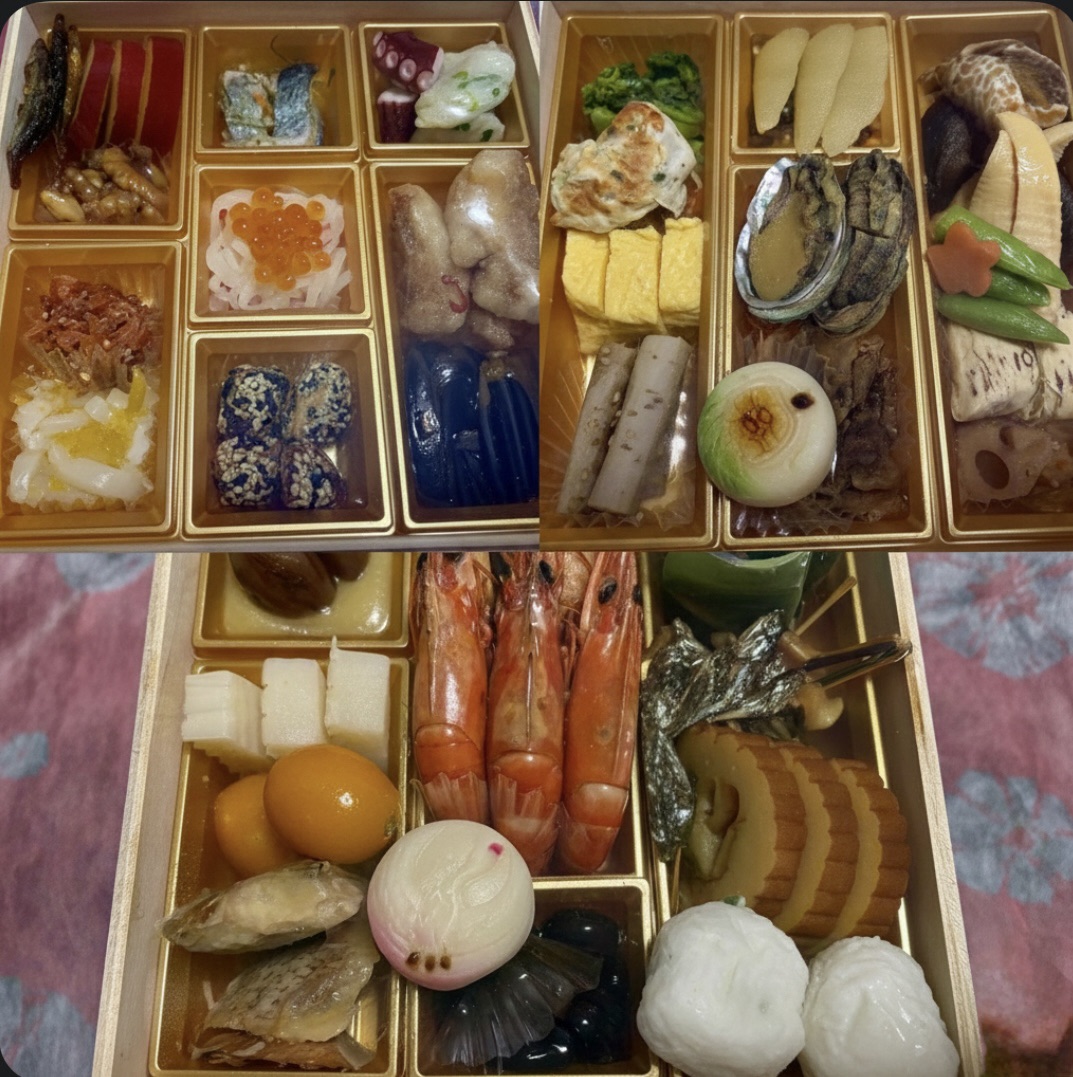
In Japan, the New Year is not just marked by fireworks or countdowns—it begins quietly, at the family table. As the clock strikes midnight on January 1st, many Japanese families welcome the year with a beautifully arranged box of traditional dishes known as Osechi Ryori.
At first glance, osechi may look like an assortment of colorful foods neatly packed into lacquered boxes. But each item carries a deeper meaning. These dishes are not chosen for taste alone—they are symbols of hope, health, prosperity, and happiness for the year ahead.
For visitors to Japan, osechi often raises questions:
What exactly is osechi? Why do Japanese people eat it only at New Year? And what do all those foods mean?
This article explores the origins of osechi, why it remains such an important tradition, and the symbolic meanings behind its most essential ingredients.
What Is Osechi Ryori?

Osechi Ryori is a collection of traditional Japanese dishes prepared specifically for the New Year holiday. These foods are usually arranged in stacked boxes called jubako, similar to bento boxes, and shared among family members during the first few days of January.
Unlike everyday Japanese meals, osechi dishes are designed to:
Last several days without reheating Be prepared before New Year’s Day Carry auspicious meanings connected to luck and longevity
The practice of eating osechi reflects a uniquely Japanese way of welcoming a fresh start—by honoring the past, resting from daily labor, and expressing gratitude for the coming year.
The Origins of Osechi: A Tradition Rooted in History

The history of osechi dates back over a thousand years to the Heian period (794–1185). Originally, “osechi” referred to seasonal offerings made to the gods at important times of the year, known as sekku.
Over time, these offerings became closely associated with the New Year, a moment when the Toshigami, or New Year deity, was believed to visit households and bring blessings for the harvest and family health.
To properly welcome this deity:
Homes were cleaned thoroughly Food was prepared in advance Families avoided cooking for several days
Thus, osechi evolved into food that could be made ahead of time and enjoyed without the need for daily kitchen work.
Why Do Japanese People Eat Osechi at New Year?
There are three main reasons why osechi is eaten during the New Year period.
1. To Celebrate a Fresh Start
New Year’s is seen as a complete reset. Osechi symbolizes wishes for a good beginning—health, success, happiness, and protection from misfortune.
2. To Rest from Daily Labor
Traditionally, cooking was considered a form of work that should be avoided at the beginning of the year. Osechi allowed families—especially women—to rest and enjoy time together.
3. To Share Meaning Through Food
Each dish in osechi has a symbolic meaning, turning the meal into a shared expression of hope and intention for the year ahead.
Essential Osechi Ingredients and Their Meanings
Below are the most important osechi foods, each carefully chosen for its symbolism.

Black Beans (Kuromame) – Health and Diligence
Kuromame are sweet simmered black soybeans.
In Japanese, the word mame means both “beans” and “to work diligently.” Eating kuromame represents a wish to stay healthy, hardworking, and energetic throughout the year.
Their glossy black color also symbolizes protection from illness and evil spirits.
Herring Roe (Kazunoko) – Prosperity and Family Growth
Kazunoko is made from herring eggs.
Because it contains countless eggs packed together, kazunoko symbolizes:
Fertility Large families Business prosperity
It is especially associated with hopes for success that multiplies over time.
Dried Sardines (Tazukuri / Gomame) – Abundant Harvest
Tazukuri, also called gomame, consists of small dried sardines cooked with soy sauce and sugar.
Historically, these fish were used as fertilizer for rice fields. As a result, they came to symbolize:
Rich harvests Financial stability Gratitude for nature’s bounty
Sweet Rolled Omelet (Datemaki) – Knowledge and Wisdom
Datemaki is a sweet, rolled omelet made with eggs and fish paste.
Its rolled shape resembles a scroll or book, symbolizing:
Learning Wisdom Academic success
It is often eaten by students or families hoping for growth in knowledge and skills.
Mashed Sweet Potatoes with Chestnuts (Kurikinton) – Wealth and Fortune
Kurikinton is a bright golden dish made from sweet potatoes and chestnuts.
Its color resembles gold, making it a symbol of:
Wealth Financial success Good fortune
It is one of the most visually striking dishes in osechi.

Kelp Rolls (Kobumaki) – Happiness and Joy
Kobumaki are rolls of kelp often wrapped around fish or vegetables.
The word kobu sounds similar to yorokobu, meaning “to be happy.”
This dish represents joy, celebration, and good news in the coming year.
Shrimp (Ebi) – Longevity
Shrimp are eaten whole, with their curved shape resembling the bent back of an elderly person.
They symbolize:
Long life Graceful aging Respect for elders
Shrimp are a powerful visual reminder of longevity.

Lotus Root (Renkon) – Clear Vision for the Future
Renkon has distinctive holes running through it.
These holes represent the ability to:
See clearly into the future Avoid obstacles Move forward without uncertainty
It is a wish for clarity and smooth paths ahead.
Red and White Fish Cake (Kohaku Kamaboko) – Joy and Purity
Kamaboko is a type of steamed fish cake, traditionally served in red and white.
Red and white are celebratory colors in Japan:
Red symbolizes happiness and protection White represents purity and new beginnings
Together, they perfectly match the spirit of the New Year.
Modern Osechi: How the Tradition Is Changing
Today, osechi continues to evolve.
Department stores sell luxury osechi prepared by famous chefs Western-style osechi includes roast beef, terrines, and desserts Single-person osechi has become popular among solo households
Despite these changes, the symbolic meanings remain at the heart of the tradition.

How Travelers Can Experience Osechi in Japan
If you’re visiting Japan during New Year:
Check department store food halls (depachika) Look for hotel New Year buffets Convenience stores also sell simplified osechi sets
Even trying just a few dishes offers insight into Japanese culture.
Conclusion: More Than Food, a Wish for the Year Ahead
Osechi is more than a New Year’s meal. It is a collection of stories, values, and hopes carefully placed into a box.
By understanding osechi, you gain a deeper appreciation for how Japanese culture connects food with meaning, family, and the passage of time.
As the New Year begins, each bite becomes a quiet wish—for health, happiness, and a brighter future.

Leave a Reply