
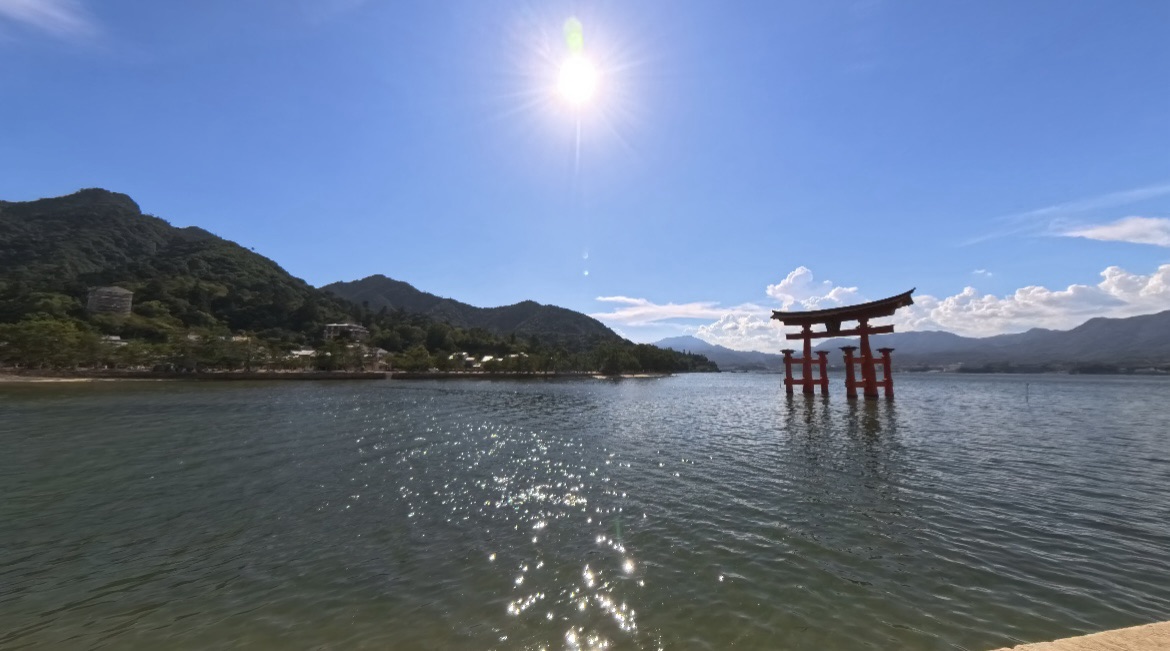
Have you ever been to Miyajima? If you travel in Hiroshima, you’ll definitely visit here. When you search on Google, Instagram etc, Miyajima is definitely up. So, here is selected over 90% visitors but why? If you read this page, you’ll understand why you wanna visit here!
Also, if you wanna get more info about Hiroshima, check my previous blog!
***Are you looking for hotel? Agoda will help you!***

1. What is Miyajima?
Here is about Miyajima’s website: https://www.miyajima.or.jp/index.php
Miyajima is very close from Hiroshima station. You need to take JR Sanyo Line and get of at Miyajima Guchi Station. It takes about 30minutes. After that, take a walk about 5 minutes to a Ferry terminal and get it on 10 minutes. Then, you arrive at Miyajima.

Anyway, why is Miyajima is so important place?
Miyajima, officially known as Itsukushima, is a small island in Hiroshima Prefecture, Japan, renowned for its historical and cultural significance. It is most famous for the iconic Itsukushima Shrine, a UNESCO World Heritage Site, which appears to float on the water during high tide. The shrine’s large red torii gate, standing in the sea, is considered one of Japan’s most photographed landmarks. Established in the 6th century, the shrine is dedicated to Shinto deities, particularly the god of the sea, and its unique location represents the deep connection between nature and spirituality in Japanese culture. The island itself has long been considered sacred, with many areas historically off-limits to ordinary people to preserve its purity.

In addition to its cultural heritage, Miyajima has a rich history as a place of worship and pilgrimage. Since ancient times, it has been revered as “The Land Where Gods Descend,” and the island’s natural beauty, including Mount Misen, has been viewed as the dwelling place of deities. Pilgrims and visitors have been drawn to Miyajima for centuries, seeking spiritual solace amid its serene landscapes. Over the years, Miyajima has become a popular tourist destination, attracting millions who come to experience its stunning shrines, lush forests, and breathtaking views, making it a place where history, spirituality, and nature converge.
2. How to enjoy?

Here are lists how you can enjoy to trip in Miyajima.
- Hang out with deers
- Have a Hiroshima foods
- Visit heritage site
First, when you arrived at Miyajima, many deers are welcoming you.
Depending on your itinerary, but in my case, I arrived here in the afternoon and I was so hungry so, I firstly go to Hiroshima Yaki’s restaurant.

Here is Hiroshima Yaki’s restaurant: Kurawanka.
(Address: Kou 589-5, Miyajima cho, Hatsukaichi shi, Hiroshima 739-0559)
It looks like so tasty! Isn’t it!?
The difference between normal Okonomiyaki and Hiroshima Yaki is using noodle and topping. Seeing this video and picture, the under layer is stir fried noodle. Also, you can select ingredients like shrimp, cheese, oyster, scallops on the top and I chose scallops.

It’s good for your lunch.

After my lunch, I went to this street food market: Miyajima Yokocho, where is located on the same street on the restaurant and I ordered baked oyster.

When I was younger, I don’t like oyster so I first don’t feel like to have this one. However, going through in front of this shop, the smell made me have it. I tried it and such a tasty!!! Miyajima’s one of famous soul food is oyster so it’s so fresh and I wanna go back here again!
Next, I take a walk to temple.
3. Daisho in Temple
Official Website: https://daisho-in.com

Daishoin is one of the most important and historic temples on Miyajima, located at the base of Mount Misen. Founded in 806 AD by the famous Buddhist monk Kukai (also known as Kobo Daishi), the temple has served as a center for Shingon Buddhism on the island. For centuries, it played a crucial role in the spiritual life of Miyajima, attracting pilgrims and monks who sought enlightenment through meditation and prayer. Daishoin was deeply connected to the religious practices surrounding Mount Misen, which was believed to be sacred, and the temple functioned as a gateway for those ascending the mountain for spiritual training.

Throughout its long history, Daishoin has been known not only for its spiritual significance but also for its role in hosting religious ceremonies for the Imperial family and other nobility. It was once the head temple of all the temples in the Chugoku region, cementing its influence in Japanese Buddhist culture. The temple complex includes many fascinating statues, halls, and religious artifacts, and its tranquil atmosphere offers visitors a peaceful retreat. Today, Daishoin remains a key spiritual site on Miyajima, welcoming both pilgrims and tourists who wish to experience its deep history and serene environment.
Sooooooooo spiritual place… Once I entered inside, I said “WOWwwww”. It was so tranquility that I meditate naturally. My favorite temple ranking is No.1.
4. Hokoku Jinja Shrine and Gojunoto

Hokoku Jinja Shrine, also known as Senjokaku, is a historic shrine located on Miyajima, near the famous Itsukushima Shrine. It was commissioned in 1587 by the powerful warlord Toyotomi Hideyoshi as a place for chanting Buddhist sutras in honor of fallen soldiers. However, the construction was never fully completed, as it was halted after Hideyoshi’s death. Despite its unfinished state, Hokoku Jinja is admired for its vast wooden hall, known as “Senjokaku,” which means “Pavilion of 1,000 Mats” due to its immense size. The shrine offers a peaceful, reflective space and provides stunning views of Itsukushima Shrine and the surrounding landscape, making it a memorable part of any visit to Miyajima.

Gojunoto, the five-storied pagoda located next to Hokoku Jinja Shrine on Miyajima, is a stunning example of traditional Japanese architecture. Built in 1407, it stands at over 27 meters tall and elegantly combines both Japanese and Chinese architectural styles. The pagoda was originally constructed to enshrine the Buddha of Medicine, Yakushi Nyorai, and serves as a symbol of spiritual protection. Its vibrant red color contrasts beautifully with the natural surroundings and the nearby Itsukushima Shrine, making it a prominent landmark on the island. Visitors often admire Gojunoto for its intricate design and its historical connection to the island’s religious heritage.
5. Itsukushima Jinja Shrine
Official site: https://www.itsukushimajinja.jp

Here is the most famous place and Miyajima’s pronoun: Itsukushima Jinja Shrine. Nobody don’t know this shrine.
Itsukushima Shrine, located on Miyajima Island in Hiroshima Prefecture, is one of Japan’s most iconic and revered Shinto shrines. Registered as a UNESCO World Heritage Site in 1996, the shrine is best known for its stunning torii gate, which appears to float on the water during high tide. The shrine’s distinctive design, built over the water on stilts, allows it to blend seamlessly with the surrounding natural landscape. This unique architectural feature, along with the spiritual significance of the site, has made Itsukushima Shrine a symbol of harmony between nature and religion in Japan.
The history of Itsukushima Shrine dates back to 593 AD, though the current structures were largely built in the 12th century by Taira no Kiyomori, a powerful military leader of the time. Dedicated to the three daughters of the sea god Susanoo-no-Mikoto, the shrine has long been a place where worshippers come to honor deities of the sea and storms. Kiyomori expanded and beautified the shrine to demonstrate his devotion to the gods, and it became an important cultural and religious center during the Heian period. Its rich history is closely tied to the rise and fall of the Taira clan and the cultural development of the region.

Over the centuries, Itsukushima Shrine has remained a sacred place, attracting pilgrims and visitors from all over the world. Its connection to the sea and its delicate balance with the natural environment has ensured its preservation and importance in Japanese culture. The shrine continues to host traditional Shinto ceremonies and festivals, such as the famous Kangen-sai Festival, where boats carry musicians around the bay to play ancient court music. Today, Itsukushima Shrine remains a must-visit destination, blending historical significance, spiritual reverence, and breathtaking beauty.
6. Conclusion

That’s all for Miyajima’s part. Totally, to trip in Hiroshima one day, it was very tough for me. After going back to my home, I just went to bed and slept. Anyway, Hiroshima is one of the beautiful place in Japan. If you have a plan to visit in Japan, why don’t you to add Hiroshima to your itinerary?

-

Japan Passport Validity and IC Passport Rules
Japan does not have a six-month rule Your passport has to stay valid for the whole time you are in Japan. That is the entry condition. Japanese embassies state that there is no minimum period of remaining validity, and one embassy FAQ adds that six months is a recommendation for smooth travel, not a requirement.…
-

Visit Japan Web: Register Once, Skip the Paperwork
Visit Japan Web is Japan’s free government website where you enter your immigration and customs details before you fly. You get a QR code, scan it with your passport at a kiosk after landing, and skip the paper forms. It is optional. I would still do the registration at home. The Queue Between the Plane…
-

CIQ in Japan: Quarantine, Immigration, Customs Explained
Your flight has landed. You collect your passport, follow the signs, and suddenly face unfamiliar procedures. CIQ in Japan covers three separate checks: quarantine, immigration and customs. Knowing what each one does helps you prepare before departure and avoid problems with items in your luggage. The Problem Every Visitor Hits The aircraft door opens. Everyone…
Leave a Reply