
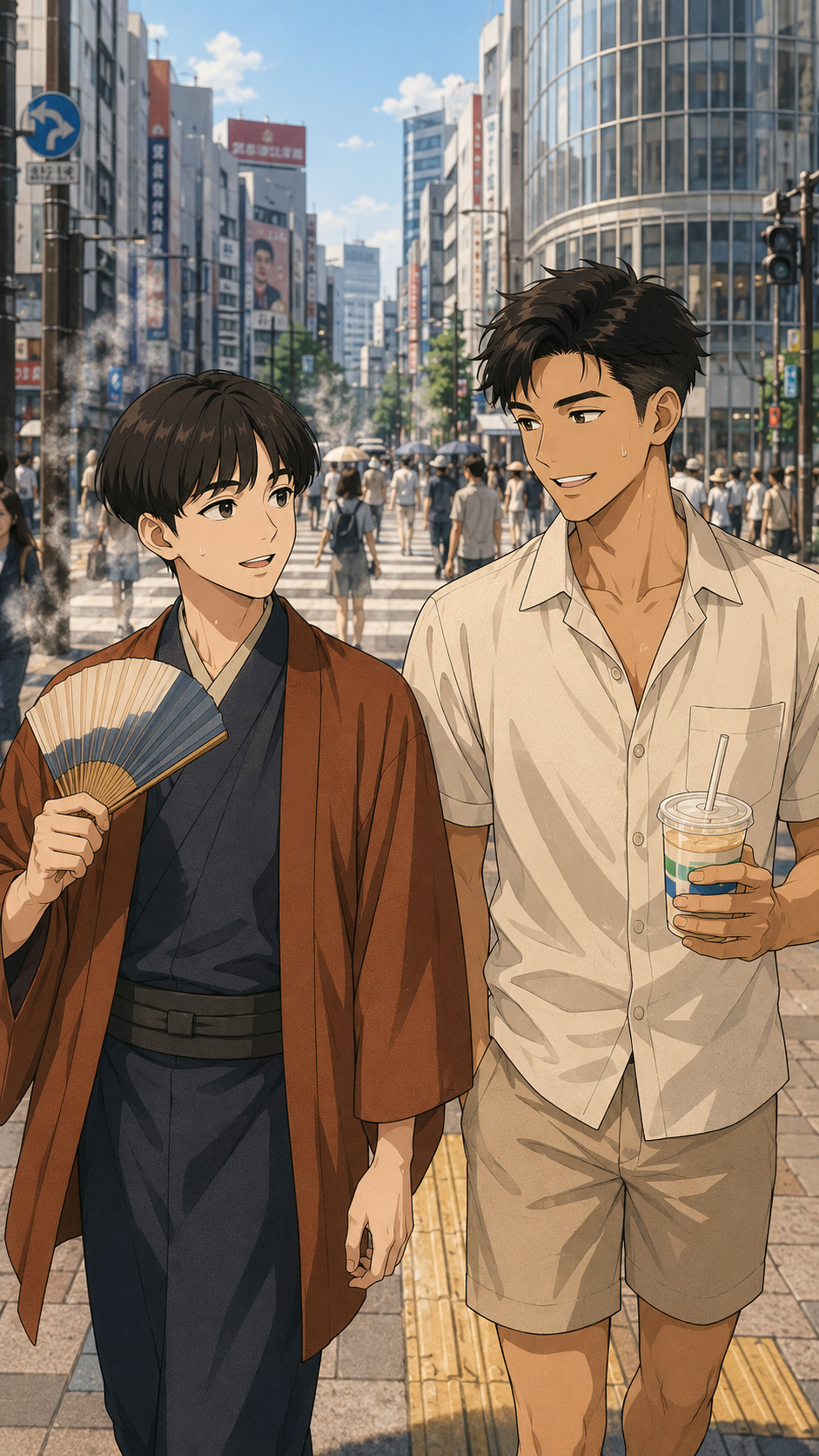
“I thought Japan would be hot. I didn’t know it would feel like this.”
That’s the sentence I hear most often from first-time summer visitors — usually somewhere around day two, standing outside a train station, shirt already soaked, wondering why a “normal” 32°C day feels like standing inside a steamed bun.
The truth is simple: it’s not just the temperature. It’s the humidity. Japan’s summer doesn’t just get hot — it gets heavy, and that difference is exactly what catches so many travelers off guard.

Why Japanese Summer Feels Harder Than Many Travelers Expect
Here’s something that surprises a lot of visitors, even ones coming from genuinely hot countries: Japan’s combination of high heat and extreme humidity can feel more punishing than a Southeast African or Southeast Asian summer. It’s not that Japan is hotter on paper — it’s that the air holds so much moisture your body loses its main cooling tool. Sweat is only useful if it can evaporate. In Japanese summer, with humidity regularly sitting above 70%, it often just sits on your skin instead, doing nothing.

A few reasons this hits travelers harder than expected:
- Humidity traps heat against your body. Meteorologists in Japan now track a heat index, the Wet Bulb Globe Temperature (WBGT), specifically because raw air temperature alone underestimates how dangerous a day actually feels once humidity is factored in.
- Concrete and asphalt radiate heat back at you. Tokyo, Osaka, and Kyoto are dense cities. Pavement and buildings absorb heat all day and release it well into the evening, so even a 10pm walk can feel like midafternoon.
- Travel days are long walking days. Between train stations, shrine grounds, and city blocks, most itineraries involve far more walking than a typical day at home — often 15,000+ steps without travelers realizing it.
Even people who feel confident in the heat back home are often unprepared for how quickly humid heat drains them here.
The Real Risk: Heat Exhaustion Sneaks Up Fast
This is the part that matters most, and it’s the part most travel guides skip past. Heat-related illness in Japan isn’t rare or theoretical — Japan recorded roughly 17,000 heatstroke-related emergency transports in a single month during a recent summer, and national fatalities from heat have climbed past 2,000 in a season. This isn’t meant to scare you off your trip. It’s meant to make you treat the heat with the same respect locals do.
Early signs to watch for:
- Dizziness or a mild headache that doesn’t go away with water
- Sudden fatigue that feels disproportionate to what you’ve been doing
- Skin that feels hot but has stopped sweating — this one is a genuine warning sign, not a relief
Why sightseeing makes it worse: Temples, gardens, and shrine complexes are often designed for slow, contemplative walking in open sun, with limited shade and long stretches between rest points. Combine that with the excitement of a new city — the tendency to push through “just one more shrine” — and it’s easy to underestimate how much you’ve exerted yourself until you’re already in trouble.
Who should be extra careful: Older travelers, young children, anyone on medication that affects hydration, and — somewhat counterintuitively — travelers from hot, humid countries who assume their bodies are already acclimatized. Japan’s specific combination of heat and moisture surprises even people who handle tropical climates well at home.
As of this year, Japan’s Environment Ministry has gone a step further, introducing a “special heatstroke warning alert” that activates when the heat index is expected to cross especially dangerous levels in a prefecture — one tier above the standard heatstroke alert already in place. If you see this alert during your trip, treat it as a real instruction to change your plans for the day, not a suggestion.
Smart Survival Habits
None of this requires giving up your trip. It just means shifting how you move through your day.

- Start early. Aim to be at outdoor sights by 8 or 9am, before the concrete has had all day to absorb heat.
- Break in the shade — on purpose. Don’t wait until you feel bad. Build 10-15 minute shade breaks into your plan every hour or so, even if you feel fine.
- Use convenience stores like survival checkpoints. Japan’s konbini culture (7-Eleven, Lawson, FamilyMart) is one of the most underrated travel tools here. Cold drinks, air conditioning, and clean restrooms are almost always within a few minutes’ walk in any city.
- Carry cooling wipes, a small handheld fan, and salt tablets or electrolyte powder. Sweating heavily without replacing salt is a fast track to feeling genuinely unwell, not just tired.
What to Wear and Carry
Pack for the humidity, not just the heat:
- Breathable, loose-fitting clothing — natural fibers or moisture-wicking fabric over anything tight or synthetic
- A small towel or handkerchief — you will sweat, and in Japan this is completely normal and unremarkable
- A compact umbrella — doubles as sun protection and rain cover (more on this below)
- A spare shirt — genuinely useful for long travel days, especially before dinner or an evening activity
- Water and a rehydration drink — Pocari Sweat and Aquarius are sold everywhere and are specifically formulated for this climate
Rainy Season and Sudden Downpours
Before the deep summer heat arrives, Japan goes through tsuyu — the rainy season, roughly June into early July. It’s easy to underestimate: not dramatic storms, just persistent, humid rain that can shift from a light drizzle to a genuine downpour within minutes.
- Adjust your mindset going in. Don’t plan a rainy-season trip assuming clear skies every day — build flexibility into your itinerary instead.
- Carry a foldable umbrella at all times, even on days that start clear.
- Choose shoes that dry fast. Canvas sneakers that stay damp all day are miserable; something breathable and quick-drying will save you real discomfort.
- Keep an indoor backup plan for every day. Museums, aquariums, department stores, and covered shopping arcades (shotengai) are ideal rainy-day options that don’t feel like a compromise.
Summer Travel Strategy by Time of Day
Rather than fighting the climate, build your day around it:
- Morning (7am–10am): Temples, gardens, and shrines. Cooler air, softer light, fewer crowds — genuinely the best version of these experiences.
- Midday (11am–3pm): This is your indoor window. Museums, galleries, department stores, and long, unhurried cafe breaks. Locals do the same thing for a reason.
- Evening (4pm onward): The city comes back to life. Evening walks, riverside areas, and the festivals Japan is famous for all happen once the sun has lost its edge.
This isn’t a workaround — it’s how Japan itself operates in summer. On the hottest days, it’s common to see far fewer people out and about during peak daytime hours unless they’re headed to the beach or a pool. The real rhythm of a Japanese summer day happens in the morning and after dark.
Summer Can Still Be Beautiful

None of this is meant to talk you out of a summer trip. Some of Japan’s most memorable experiences only exist in these months:
- Fireworks festivals (hanabi taikai) — massive, community-wide events that transform riverbanks and parks after dark
- Matsuri (summer festivals) — lantern-lit streets, taiko drums, yukata everywhere, food stalls on every corner
- Deep green landscapes — rice fields, mountain trails, and gardens at their most lush and alive
- A slower rhythm — mornings that reward early risers, and evenings that stretch long and easy
Travelers who plan around the heat instead of fighting it tend to come away with a better trip, not a smaller one. The trick is simple: don’t try to travel through a Japanese summer like it’s spring. Respect the humidity, move with the rhythm locals already follow, and the season opens up in a way that’s genuinely worth it.
Save this before visiting Japan in June, July, or August — the heat here is real, but so is the reward for planning around it.

A note on this summer specifically
Forecasters are expecting above-normal temperatures across Japan through the June–August window this year, with extremely hot stretches likely even after rainy season ends, especially across eastern and western Japan. The government’s new top-tier “special heatstroke warning alert” is active for the first time this season, alongside the existing heatstroke alert system — a sign of how seriously this is being taken nationally, not just anecdotally.
Sources:
- Japan Times — “Special heatstroke warning alert” to be implemented for summer
- Metropolis Japan — Beating the Heat: A Practical Guide to Heatstroke in Japan
- News On Japan — Brutal Heat to Grip Japan as Heatstroke Risk Climbs
- Japan Living Life — Heat Stroke Prevention in Japan: Complete Summer Safety Guide


Leave a Reply